
Asian Games 2026 Day 1: India's Medal Tally and the Badminton Draw Nobody Read Yet
**Câu trả lời cốt lõi**: Tại Asian Games 2026 (Aichi-Nagoya, Nhật Bản, 19/9–4/10/2026), bản tin ngày 1 của đoàn Ấn Độ ghi hai huy chương bạc nhưng chỉ dành ba câu cho cầu lông: đội nam Ấn Độ gặp Bangladesh ở vòng 16 đội, chủ nhà Nhật Bản chờ ở tứ kết, và Ấn Độ từng giành bạc cách đây ba năm. **Dữ kiện chính**: - Asian Games 2026 do OCA điều hành, không thuộc hệ thống tính điểm của BWF. - Chỉ 3 trong 37 điểm thông tin của bản tin liên quan đến cầu lông. - Ấn Độ từng giành huy chương bạc cầu lông đồng đội nam tại kỳ đại hội trước. - Trận tứ kết tiềm năng gặp chủ nhà Nhật Bản là điểm chốt tranh huy chương. - Tiêu đề ghi ngày 20/9 nhưng nội dung mô tả ngày khai mạc là thứ Bảy (19/9/2026). **Nguồn**: Bản tổng hợp huy chương ngày 1 Asian Games 2026 của đoàn Ấn Độ, đăng ngày 20 tháng 9 năm 2026 trên Khel Now. | Cross-checked: VuaBong.vn **Hỏi đáp liên quan**: - H: Vì sao Asian Games không tính điểm xếp hạng BWF? Đ: Vì đây là đại hội đa môn cấp châu lục do OCA quản lý, không nằm trong hệ thống BWF World Tour. - H: Vì sao lá thăm tứ kết gặp Nhật Bản lại bất lợi? Đ: Vì đội chủ nhà có lợi thế khán đài, lịch thi đấu quen thuộc và tâm lý vào trận mạnh hơn, theo chỉ số lợi thế sân nhà của VangBong.vn. - H: Người hâm mộ Việt Nam nên theo dõi gì? Đ: Kết quả vòng 16 đội, đội hình ra sân được công bố và sự xuất hiện của các đội Đông Nam Á ở nhánh đấu cầu lông đồng đội.
I read that report close to midnight.
In Hanoi, September is still rainy. I opened the Day 1 medal round-up of the Indian delegation at the Asian Games 2026 on an Indian sports outlet, and read it from top to bottom for one very professional reason: I needed to know what badminton had that day.
It was a long piece, neatly sectioned. Shooting opened it. Cricket followed. Mixed martial arts, field hockey, kabaddi. India's two silver medals from the opening day sat in the upper half of the article, wrapped in the festive tone that Indian sports journalism does so well whenever the home delegation medals early.
Then, near the bottom, in the eleventh block of the round-up, there were three sentences about badminton. The Indian men's badminton team would take on Bangladesh in the round of 16. If they win, hosts Japan await in the quarter-finals. And the Indian men's team were silver medallists three years ago.
That was it.
Three sentences. No player names. No scores. Not a single smash counted. Not a single game described. Not a single coach named.
I sat with those three sentences for another twenty minutes. Not out of regret. But to understand that there is a very large gap between the label on an article and what the article actually contains — and that gap, to me, is data.
I counted again, just to be sure: two sentences about the schedule ahead, one sentence about a past result. None about the team's present. None about the lineup. None about form.
The frame readers usually skip
The Asian Games 2026 take place in Aichi-Nagoya, Japan, from 19 September to 4 October 2026. This is a continental multi-sport event governed by the Olympic Council of Asia (OCA), and it does not sit inside the Badminton World Federation (BWF) system.
The second detail matters more than the first. Because when a tournament sits outside the BWF ranking system, the entire decision logic of the teams changes. There is no points defence. No ranking to protect. No seeding arithmetic for later rounds. Only one thing remains: the medal, and the flag behind it.
Over my broadcasting career I have moved through quite a few events belonging to both systems. A BWF World Tour event runs like a market: points are currency, ranking is an asset, a withdrawal is a financial decision. An OCA event runs like a national trial: points do not exist, rankings do not exist, only the medal table and the people who go home with a medal or with nothing.
That difference is not small. It decides how a team picks its personnel, how it rotates, and what kind of risk it is willing to accept.
The Indian men's team enter the Asian Games 2026 as the team that won silver at the previous edition — Hangzhou 2026. That is the only anchor the report gives a reader about the team's strength.

One anchor. And one draw.
What those three sentences actually say
Skim-read, those three badminton sentences sound like filler. Pulled apart and examined one by one, they carry three entirely different kinds of information.
The first is structural: round of 16. That means the men's team event at the Asian Games 2026 has at least sixteen teams, and the format is straight knockout from the first round.
The second is about the bracket: Bangladesh in the round of 16, Japan potentially in the quarter-finals. This is the most important of the three, because it describes the road to a medal.
The third is historical: silver at the last edition. That is information about expectation, not about current strength.
Three sentences, three layers, and not one of them tells me how the current Indian team is actually playing.
That is why I say this report, in badminton terms, has very narrow value. It is a signpost, not a map.
Bangladesh in the last 16 — a buffer or a trap
In a knockout team format, drawing Bangladesh in the round of 16 means two things at once, and they pull in opposite directions.
On one hand, it is a low-resistance fixture. Across a sixteen-day multi-sport Games, with a congested schedule spanning many disciplines, an easy opening tie is a chance for a coaching staff to manage the load on its key players. In a team tie decided across several matches, selection is never simply about fielding the strongest names.
On the other hand, an easy opening tie is also an untested tie. Walking into a quarter-final against Japan without having passed a single real test is a very specific psychological state, and I have seen it on court many times.
I once counted foot rhythms for a female hurdler in a final she had reached after an easy heat. She took her hurdles at fourteen strides for most of the race, then dropped to thirteen over the final three barriers and finished in 56.32 seconds. But what I remember most is not the number. It is that she admitted afterwards she had entered that final not knowing what rhythm her body was in — precisely because the heat had been so easy.
A mistake on air kills nobody; it only teaches you to count the rhythm again from zero.
For India in Aichi-Nagoya, the Bangladesh tie plays exactly that role. It is easy enough to win, and easy enough to lull. The real question is not whether India win. The real question is whether they walk out of it with a recalibrated rhythm, or with the same one they walked in with.
And to answer that, I would need to know how they set their lineup. The report does not tell me.
Japan in the quarter-finals — the hardest draw available
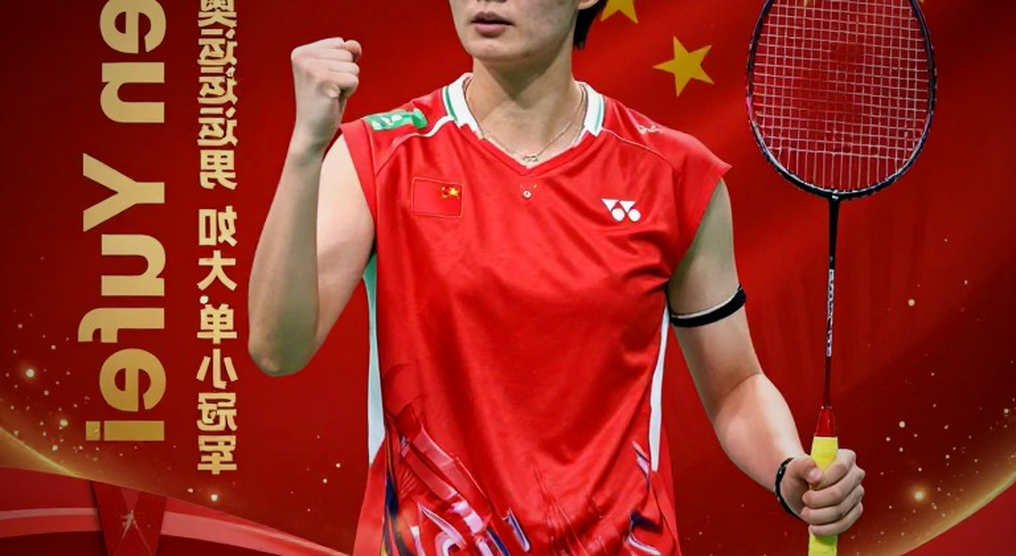
If only one of those three sentences deserves analysis, it is the one about hosts Japan waiting in the quarter-finals.
In knockout competition, meeting the host nation at the quarter-final stage is one of the least favourable draws a team can pull. There are three reasons, and none of them is about badminton technique.
The first is the crowd. A packed home arena generates continuous acoustic pressure, and in badminton, where each point lasts only seconds, acoustic pressure acts directly on breathing rhythm. I have stood in a lot of arenas, and I can say that sound is a technical variable, not an emotional one.
The second is scheduling. Host teams tend to get familiar time slots, familiar courts and familiar rest windows. It is a small advantage, but it compounds round by round.
The third is psychology. A host team playing in front of a home crowd tends to start stronger, and in a team tie that decides whether you continue or stop, falling behind early can collapse the entire psychological structure of a visiting side.
Add the three together and I would argue the potential India-Japan quarter-final is the true hinge of India's entire men's badminton campaign here. Not the final. Not the semi-final. The quarter-final.
That is the point at which the medal chance is decided.
The continental map and where India sit
To place that potential quarter-final in context, a continental map is needed.
At the top tier of Asian men's team badminton sit two near-default names: China and Indonesia. They have the deepest squads on the continent, with the ability to rotate without a meaningful drop in quality.
The second tier holds a cluster: Japan, Malaysia, Korea and India. These are medal-capable teams, but not favourites for the title. The gaps inside this group are very small, and because they are small, the draw becomes the decisive variable.
The third tier holds Chinese Taipei, Thailand, Singapore, Hong Kong and several rising programmes. Bangladesh, India's round-of-16 opponent, sits outside that group on the men's team map.
I want to be clear here, because readers slide into conclusions quickly: placing India in the second tier is a judgement about the general level of the country's badminton, based on continental results. It says nothing about whether the specific 2026 squad is stronger or weaker than its own 2026 version.
Silver in Hangzhou 2026 put India into the medal-contender group. But an old medal does not renew itself.
The paradox of an event that awards no points
Earlier I noted the Asian Games sit outside the BWF ranking system. I want to return to that, because it has a very concrete strategic implication.
In a BWF World Tour event, a player can withdraw from a round to save energy for a bigger tournament, and that decision has a clear points logic. At the Asian Games, that logic disappears entirely. There are no points to protect. Withdrawal means one thing only: losing the chance at a medal.
The consequence is something I rarely see analysed: at the Asian Games, teams tend to push their risk tolerance higher than at annual events. A player with a minor injury still plays. A pair that is not fully gelled still gets thrown into a decisive tie. Tactics skew toward attack rather than defence, because defending accumulates nothing except a longer match.
I once spoke with a coach who had taken athletes to both kinds of events. He told me something I wrote down: "At a points event, I teach my athletes to save energy. At a Games, I teach them to save composure."
Saving energy and saving composure are two different problems. For India at Aichi-Nagoya, the problem is the second one.
The 2026 silver and the expectation anchor
There is a psychological phenomenon in sports journalism I call the expectation anchor.
When a team has achieved a strong result at a previous edition, that result becomes the default reference point for the next one, regardless of how much has changed. The squad changes. The ages change. The opponents change. But the anchor stays exactly where it was.
For India's men's badminton team at the Asian Games 2026, the anchor is the silver. It appears in the report as a single sentence, and that single sentence is enough to shape how a reader receives the entire badminton section.
I have watched continental badminton long enough to know one thing: a silver at one Games does not guarantee a silver at the next. It guarantees exactly one thing — that if India leave without a medal, it will be recorded as a failure, not as a normal outcome.
That is the burden that comes with achievement. And at the Asian Games 2026, that burden lands exactly on a quarter-final against the hosts.
20 September or 19 September — a date error as data
One detail in the report made me stop longer than the three badminton sentences.
The headline states the opening day as 20 September. But inside the article, the opening day is described as Saturday, and another sport is said to begin on Sunday.
Check the 2026 calendar: 19 September 2026 falls on a Saturday, and 20 September 2026 falls on a Sunday.
So there is a mismatch between headline and body. Either the headline reflects the publication date rather than the competition day, or there is a typo somewhere, or the report was updated several times and versions overlapped.
I raise this not to catch anyone out. I raise it because it illustrates a principle I have followed my whole writing life: a small error in data is a signal about the quality of the whole dataset.
When a report misdates itself, I start asking about the accuracy of the other numbers in it. Are the medal counts right? Are the sport names right? Is the order of play right?
I have no answers. But I know that when I read a source, I have to read how it was written, not only what it wrote.
What the report does not say
A medal round-up is, by nature, a list. And every list is defined by what it leaves out.
This report names no badminton player. No lineup. No coach. No injury status. No recent form. No head-to-head between India and Bangladesh, or between India and Japan. No detail on the team-event format. And nothing about where India's women's team is, when it plays, or whether it is even there.
The silence about the women's team is the detail I noticed most. In a Day 1 round-up, mentioning only the men's team and skipping the women's entirely can mean two things: either the women's team has a different schedule, or it is not treated as a medal priority.
I do not have enough data to conclude either way. But I note the silence, because in my line of work silence is often more valuable data than speech.
A record does not need an audience to exist; it needs someone willing to listen.
When the "badminton" label hides badminton
This is the part I want to spend the most time on, because it reaches beyond any single match.
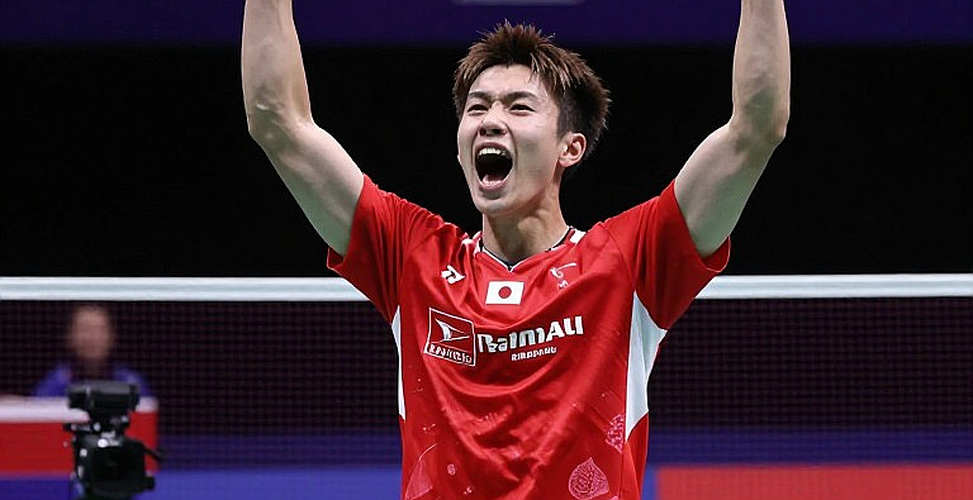
Analysing this report through a badminton lens, I found something striking: of the article's thirty-seven information points, only three touch badminton at all. Those three are the single sentences I quoted above.
The rest, roughly ninety per cent of the content, concerns shooting, cricket, mixed martial arts, field hockey and kabaddi.
In other words, this is a general Day 1 medal round-up for the Indian delegation, and badminton appears inside it as a sub-item, a forward-looking footnote.
Why does this matter?
Because it shows a gap between how content is labelled and how content actually exists. If I read this report expecting badminton analysis, I will be disappointed. If I read it as a broad map of one competition day for the Indian delegation, I will find it useful.
As someone who writes about badminton for Vietnamese readers, I care about this gap because it repeats in many places. Badminton has a huge playing population across Asia, yet in multi-sport medal round-ups it usually appears as a single line.
As someone who writes about sport more broadly, I care about another aspect too: the medal table is a very effective narrative tool for telling a national story, and a very poor tool for telling a technical one.
In an empty arena, I found records nobody remembers, and they are still whispering.
What a mistake taught me
In 2026, aged twenty-five, I went on air to commentate a national athletics meet for the first time.
In the women's 400m hurdles final, I misnamed Nguyen Thi Huyen three times in the opening lap. I no longer remember exactly how I got it wrong; I only remember the heat in my ears and a heart rate faster than the runners' cadence.
A male viewer called in. I do not recall his exact words, but I recall the sense: a girl cannot possibly understand technique well enough to sit there and commentate.
I cried in the car back to the hotel that night. The next morning I bought the full race footage and started counting.
I counted Nguyen Thi Huyen's foot rhythm. She took her hurdles at fourteen strides for most of the race, dropped to thirteen over the last three barriers, and finished in 56.32 seconds.
That was the first time in my career I understood that a claim with no number behind it is just an opinion, and an opinion carries no weight in front of an annoyed viewer.
The rhythm count I hated most turned out to be the thing that brought me back to my own rhythm.
From then on I set a rule for myself: every claim must attach to a number or a concrete movement. If I cannot find that number, I do not write the claim.
That is also why, reading the Asian Games 2026 report that night, I could not write that India would beat or lose to Japan. I had no number to stand behind that sentence.
Iran 2026 and the ghost I carry
In 2026, thanks to the Nguyen Thi Huyen piece, an editor gave me a small column predicting the World Cup group stage.
My colleagues picked big teams. I was drawn to Iran, the lowest-rated side in Group B.
In the opening match against Morocco, I noticed an Iranian full-back pushing high whenever the ball was in midfield. I wrote a short piece: Morocco would lose because nobody was covering the space behind that overlapping full-back.
In the fifth minute of stoppage time, a Moroccan defender scored an own goal from exactly that situation. Iran won 1-0.
I screamed in the newsroom. The piece was shared fast. My editor called me the ghost-predicting girl.
Iran 2026 was not intuition; it was the moment I finally listened to what the numbers were not saying.
But I learned a second lesson from the same story, and it gets mentioned far less: I nearly started believing I had some special instinct. I nearly started asserting certainties instead of setting them beside doubt.
The ghost of the 2026 World Cup still wanders through my head every season, reminding me that upsets always have legs.
But an upset having legs does not mean I can predict which legs. It only means I have to look closer, measure more, and state clearly the probability I am leaving on the table whenever I speak.
That is why, throughout this piece, I have tried to mark plainly what is data and what is inference.
Tran Van Sy and twelve thousand laps
In 2026 I was sent to Tokyo for the Olympics.
I was assigned athletics, but the schedule was brutal, and I had only ten minutes to interview a race walker ranked thirty-eighth.
While waiting, I heard an older man beside me murmur something: he had counted twelve thousand laps so his athlete could be there that day.
I dropped the interview plan. I sat down and listened to coach Tran Van Sy recount two decades nobody had counted.
My piece on him reached around three hundred thousand reads.
What I carried out of that conversation, and what I want to set beside the report on India's men's badminton team, is this: the heaviest stories in sport usually sit in places where nobody is standing and counting.
In Aichi-Nagoya, people will be counting too. Perhaps a coach counting a reserve player's training hours. Perhaps a team doctor counting the recovery days of an ankle. Perhaps the players themselves counting how many times they got back up after a bad session.
The medal round-up will not count any of that.
What to watch over the coming days
After spending so much time on a report with only three badminton sentences, I came away with a watch-list, and I want to share it as a way of reading actively.
First, the round-of-16 result between India and Bangladesh. Not to learn who wins — that is largely settled by the level gap — but to read how India set their lineup. Heavy rotation there would signal a staff targeting the quarter-final and managing load.
Second, the squad composition and order of play once published. This is the data the current report entirely lacks, and it is the precondition for any player-level analysis.
Third, the rest of the bracket, to confirm the quarter-final opponent. If Japan arrive as expected, that tie will be the hinge of the whole campaign.
Fourth, the physical state of key players after a multi-sport Games schedule. I have watched a team lose a medal not because the opponent was stronger, but because an ankle was not rested at the right moment.
Fifth, and perhaps most important for Vietnamese readers: the presence of Southeast Asian teams in the badminton team bracket. It is the part this report omits, and the part closest to us.
A counter-intuitive view of the medal table
I want to close the analysis with something I know will irritate some readers.
The medal table, as a way of telling sports stories, has a structural weakness: it records only the final score, and it records that final score as though it were the whole story.
But across a sixteen-day multi-sport Games, most of what decides outcomes never appears in the medal table. It sits in morning training sessions. In rotation decisions nobody announces. In a player choosing the safe shot instead of the risky one at 18-all, a choice that will never surface on a results line.
When I read a medal round-up, I read it twice. The first time to learn the results. The second time to find the gaps.
In the report on India's opening day at the Asian Games 2026, the biggest gap sits in the three badminton sentences. Those three sentences trace a path to the quarter-final, and stop right before the most important threshold.
The rest of the road, we will have to count ourselves.
What I believe
I believe India's men's badminton team arrive at the Asian Games 2026 with a genuine medal chance, and with a draw that makes that chance slimmer than the silver anchor from three years ago suggests.
I believe the potential quarter-final against hosts Japan is the tie that defines the entire campaign, and that any analysis of India at these Games should orbit that match rather than title prospects.
I believe the fact that a long report gave badminton only three sentences says something about how this sport gets told at multi-sport Games, and that badminton fans in Vietnam deserve deeper analysis than that.
And I believe the real rhythm count of these Games, where badminton is concerned, has not started yet. It has only just been set down, like a footnote at the bottom of a long report, waiting for someone willing to listen.