
KRAFTON Admits It Had No Clear Rules: PUBG Asia Stars 2026 and the Crack in Vietnam-Korea Trust
Trả lời nhanh: KRAFTON xác nhận Himass và TanVuu dùng thông tin ngoài trận ở PUBG Asia Stars 2026, đồng thời thu hồi tư cách Đối tác PUBG Việt Nam của cả hai. Mức án kỷ luật chưa công bố; cáo buộc với streamer Soopi chưa có kết luận. Nguyên nhân gốc là giải chưa có quy định rõ ràng ngay từ đầu. Dữ kiện chính: - Himass và TanVuu bị KRAFTON xác nhận sử dụng thông tin ngoài trận tại PUBG Asia Stars 2026. - Tư cách Đối tác PUBG Việt Nam của Himass và TanVuu bị thu hồi trước khi có án kỷ luật. - Ông Yoon Soo-jin, phụ trách mảng PUBG Publishing của KRAFTON, công khai xin lỗi và thừa nhận thiếu sót. - Tin đồn cấm thi đấu một năm với Himass chưa được KRAFTON xác nhận. - Cáo buộc stream sniping với streamer Hàn Quốc Soopi chưa có kết luận chính thức. Nguồn: Phân tích chuyên sâu giai đoạn 2 về PUBG Asia Stars 2026, công bố ngày 13/08/2026 | Cross-checked: VuaBong.vn Hỏi đáp liên quan: Hỏi: Khi nào KRAFTON công bố mức án cho Himass và TanVuu? Đáp: Chưa có ngày cụ thể, KRAFTON cho biết quá trình kỷ luật đang tiếp tục và kết quả sẽ được công bố riêng. Hỏi: Cáo buộc với streamer Soopi đã có kết luận chưa? Đáp: Chưa, đến ngày 13/08/2026 chưa có kết luận chính thức nào về cáo buộc stream sniping với Soopi. Hỏi: Vì sao cộng đồng Việt Nam phản ứng mạnh với PUBG Asia Stars 2026? Đáp: Vì một bên đã bị thu hồi tư cách đối tác trong khi cáo buộc phía Hàn Quốc chưa có kết luận, tạo cảm giác xử lý không đồng đều.
Mia Rodriguez | Esports commentator
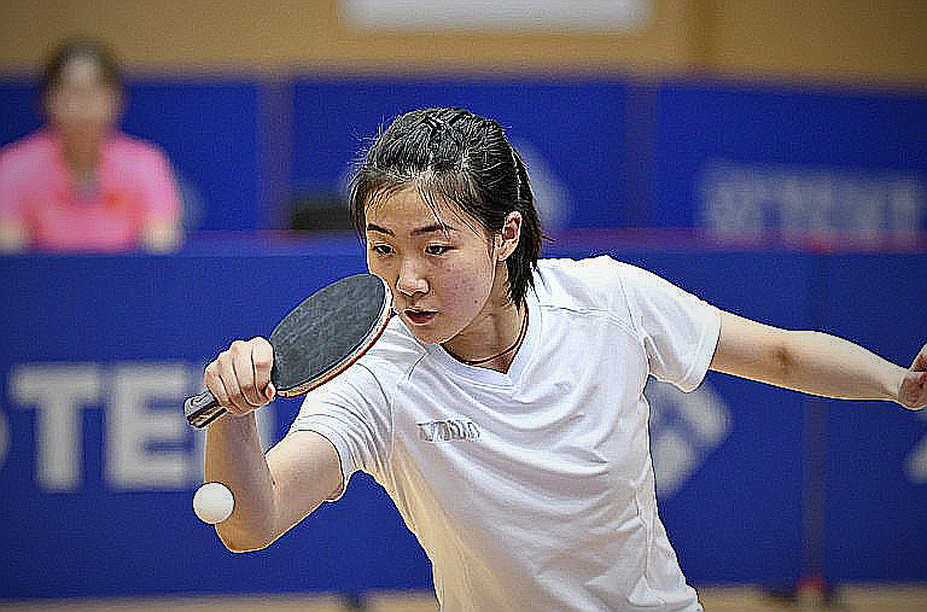
A short notice from KRAFTON, posted on its official channel, confirmed that two Vietnamese players, Himass and TanVuu, used outside information during matches at PUBG Asia Stars 2026. Less than a day later, Vietnamese PUBG forums were flooded with a different penalty figure: a one-year ban. That figure has never appeared in any official document from the publisher. It lives only in posts, screenshots, group chats and two a.m. arguments.
The one thing confirmed with a concrete commercial consequence has been mentioned far less: the PUBG Vietnam Partner status of both players has been revoked. That decision is real, it is in force, and it arrived before any disciplinary penalty was announced. A business-level sanction has already landed while the disciplinary process remains open.
Context
PUBG Asia Stars 2026 is a cross-regional exchange event between Vietnam and South Korea, positioned below the global championship tier. That detail makes the story heavier, not lighter. At an event where the spirit of exchange is assumed to sit above results, an integrity dispute erupted, dragging in a harder question about how the publisher treats different regions.
Three things are confirmed. KRAFTON confirmed that the two Vietnamese players used outside information during matches. Their PUBG Vietnam Partner status was revoked, the disciplinary process continues, and no penalty level has been published. Yoon Soo-jin, who heads PUBG Publishing at KRAFTON, publicly apologised.
Three things are unconfirmed. The allegation that a Korean female streamer named Soopi monitored a live stream for in-game advantage has no official conclusion. The reported one-year ban for Himass has not been confirmed by the publisher. And the Vietnamese side has raised three separate points: that players asked before the event whether watching streams was prohibited and were told it was not; that the community found other operational problems; and that information was not communicated consistently across languages.
The vulnerability is structural, not a patch issue
PUBG is a battle royale. A match unfolds across a large map with dozens of concurrent teams, and broadcast delay is the only barrier against outside information entering the game. When the delay is too short, someone off-server can see an opponent's position, rotation and decisions before that opponent finishes making them.
Based on my own experience tracking matches, from battle royale competitions to events I helped organise from 2026 onward, broadcast delay is the only variable that can close that door. This shapes the category of risk: it is a permanent vulnerability tied to the battle royale format, not a flaw fixed by the next patch. No update removes the possibility that someone outside the server watches a stream. Only tournament rules address it.
KRAFTON conceded something similar at another level: it did not establish clear regulations from the start, did not publish prevention, assessment and penalty criteria before the event began, did not adequately protect participants once the drama spread, and did not communicate consistently across languages.
The most dangerous variable is retroactivity
In any competitive integrity case, the penalty draws the attention. The penalty is not the decisive variable here. The decisive variable is when the rules were written.
When no rule exists at the time of the conduct, any later penalty can be contested with a single argument: the punishment was built after the fact. The publisher confirmed the conduct, holds the authority to sanction it, has reason to sanction it, and still ends up on the defensive, because the legitimacy of the process is questioned at its root.
The claim that players asked before the event sharpens the structure. If a verbal answer stated that watching streams was not banned, the basis for sanction becomes a basis created in inconsistency. That claim has not been independently verified, but the publisher itself admits it had no clear rules from the start. Put those two facts together and the picture is hard to rebut.
The publisher makes the rules, runs the investigation and holds the commercial stake
This is the governance structure esports analysts keep pointing to: the rule-maker, the investigator and the commercially interested party are the same entity. KRAFTON organises the event, writes the rules, earns from the ecosystem, investigates the breach and issues the conclusion. No independent arbitration mechanism sits in between.
The consequence is not that the publisher is necessarily biased. The consequence is that no tool exists to prove otherwise. Without a counter-checking mechanism, trust rests entirely on the credibility of the judging party, and that credibility has just been weakened by the judging party's own admission of shortcomings.
The handling asymmetry is a communications problem, not a procedure problem
The Vietnamese players' breach is confirmed. The allegation against the Korean streamer is unconfirmed. Fast handling of one side and open-ended handling of the other can be entirely defensible on procedure: one side has evidence, the other does not.
But an information vacuum produces a sense of unfairness, and that sense operates independently of procedural logic. Vietnamese fans see one side lose partner status and another side with no conclusion, and they draw their own. The publisher can maintain that procedure was correct and still lose the trust battle, because the thing it does not publish is the thing the community is waiting for.
The principle I have drawn from years of watching similar cases: silence is never a win, only extra time before collapse. Every day without a conclusion, the vacuum fills with speculation, and speculation always favours the side that feels unfairly treated.
Match results remain under question
Beyond discipline, an unanswered technical question persists: which matches involved outside information, and were their results affected? No results review has been announced and no transparency report has been published. At an exchange event this may not change any title, but it changes the reference value of the entire match dataset, and it weakens exactly what an exchange event needs most: confidence in what happened on the map.
At industry level, the case touches a question with no settled answer: what obligations bind streamers and influencers when they enter an official tournament. Soopi's case shows a non-competitor can sit at the centre of an integrity dispute while the rulebook covering that group barely exists.
The economics of a penalty without tiers
Revoking PUBG Vietnam Partner status carries clear economics. Partner status typically comes with collaboration, content and revenue-share privileges. Losing it is a downgrade in commercial standing, not a footnote in a disciplinary file.
What stands out is that the commercial sanction was applied before any disciplinary ruling. The sequence breaks the symmetry of interests: one side absorbs quantified damage before the final penalty is known, while the other absorbs none while waiting. The damage to the two players is unquantified, and if a one-year ban is confirmed, their competitive earning capacity will be severely constrained during the shortest window of a career.
Spillover risk is also present. In related coverage, another Vietnamese player, Eddie, is described as collateral damage due to a weak interpreter. Once a story is told through regional labels, uninvolved people get named. That brand risk is hard to reverse, and it needs no ruling to take effect.
Rumour fills the gap faster than any press release
The reported one-year ban for Himass spread before any official decision. Coverage of the story has had to repeatedly note that the figure is unconfirmed. That an unverified penalty still circulates widely shows the missing element is not public interest, but an announcement timeline.

When no publication schedule exists, the public builds its own. In that gap, the only remaining yardstick is memory of past cases, and esports memory of past cases always tilts against the publisher.
The biggest risk is not the penalty
Three factors push the risk to a high level simultaneously: a confirmed breach, a rulebook written after the fact, and a regional tension feeding itself on a Vietnam-Korea label. These compound rather than cancel each other out.
For the Vietnamese ecosystem, the impact is measurable in behaviour: streamers announcing they will delete the game in protest. For KRAFTON, the impact sits in the market. The new meta lives where people fear losing something, not in tactics. A publisher responding to market-loss risk acts differently from one handling a technical fault.
Where I could be wrong
I argue the final penalty matters less than how the publisher releases it. This line of reasoning has an obvious weakness: if KRAFTON publishes the full file, new regulations and a finding on the Soopi allegation in one announcement, the affair could close faster than anyone predicts, and the crack-of-trust analysis will look heavier than warranted.
A second possibility gives me pause: the pre-event clarification claim could fail entirely without evidence. If that happens, the retroactivity argument loses a leg and the story returns to something simpler, a breach that was punished.
A third suspicious point sits with the community. The Vietnam-Korea drama label generates large engagement for whoever reports it. Attention flows to an unconfirmed penalty more than to a confirmed problem, an empty rulebook. The player labelled a rule-breaker is often the one who sees the hole most clearly, and here the accused are pointing out that the hole existed before anyone stepped into it.
What to track
Three checkpoints. First, the official disciplinary notice for Himass and TanVuu: the penalty level will confirm or kill the one-year rumour. Second, any finding on the Soopi allegation, whatever it says, because a clear finding dismantles the double-standard argument. Third, integrity regulations for upcoming cross-regional events, particularly rules on broadcast delay and outside information.
If the first two remain open while the next event begins with no published rulebook, this incident will repeat under another name. When a system handles a crisis by waiting for it to pass, it is not solving the root cause. It is waiting for next time.