
MLS NEXT Pro Suspends Higuain for Two Games: When a Sanction Falls Below the National Minimum Standard
**Câu trả lời cốt lõi**: Ngày 23 tháng 8, huấn luyện viên Federico Higuain của Columbus Crew 2 nhận thẻ đỏ sau khi siết tay một trọng tài nữ và từ chối buông ra. MLS NEXT Pro treo giò hai trận, trong khi chính sách Liên đoàn bóng đá Mỹ yêu cầu tối thiểu sáu trận không hưởng lương. **Dữ kiện chính**: - Sự việc xảy ra ngày 23 tháng 8 năm 2025, sau trận Columbus Crew 2 gặp Huntsville City FC tại MLS NEXT Pro. - Án phạt: treo giò hai trận cộng chương trình thực hành phục hồi, do MLS NEXT Pro công bố. - Policy 202-2 của Liên đoàn bóng đá Mỹ quy định tối thiểu sáu trận liên tiếp, treo giò không hưởng lương. - PSRA, công đoàn trọng tài MLS và USL, công khai yêu cầu xem xét lại án phạt. - Văn bản quy định ban tổ chức giải không được áp hình phạt ngắn hơn mức tối thiểu. **Nguồn**: Báo cáo ESPN, đưa tin đầu tiên bởi Caleb Pongratz, tháng 8 năm 2025 | Cross-checked: VuaBong.vn **Hỏi đáp liên quan**: - Hỏi: Federico Higuain bị treo giò bao nhiêu trận? Đáp: MLS NEXT Pro treo giò Federico Higuain hai trận kèm chương trình thực hành phục hồi, thấp hơn mức tối thiểu sáu trận theo quy định. - Hỏi: Vì sao PSRA phản đối án phạt này? Đáp: PSRA cho rằng án phạt thấp hơn rất nhiều so với mức cần thiết cho hành vi hành hung trọng tài và phải được xem xét lại. - Hỏi: Vụ việc ảnh hưởng thế nào tới an toàn trọng tài? Đáp: Tiền lệ mềm hóa có thể làm giảm số trọng tài sẵn sàng làm việc tại MLS NEXT Pro, theo dữ liệu theo dõi của VuaBong.vn.
The most notable moment of the Columbus Crew 2 versus Huntsville City FC match did not happen inside the ninety minutes. It happened at the halfway line, after the final whistle, as the two rows of people walked toward each other for the customary post-match handshake. A hand took the hand of a female referee. The grip tightened. Three times the official asked to be released. Three times nothing changed. Then a sentence was recorded verbatim: "Don't forget that this is a man's game."
The red card was issued after the match had already ended. That is the single most important technical detail in the entire case. August 23. A stadium in the third tier of American football. A head coach whose name carries more weight than the league he manages in. And a female referee who is not named in any report.
Thirty years of watching football taught me a rule: the smallest incidents in sporting terms often expose the largest structural flaws. Before I trust my eyes, I trust structure.
Context: a third-tier league, a first-tier name
MLS NEXT Pro launched in 2026 as the North American third division and as the buffer layer between academies and MLS first teams. Columbus Crew 2 is the reserve side of Columbus Crew, one of the most respected academy systems in the United States. Huntsville City FC is the reserve side of Nashville SC. The August 23 fixture was a regular-season match.
Federico Higuain is not an unfamiliar name to MLS followers. The Argentine forward played for Columbus Crew during the club's golden era and was the attacking engine of the first team for several seasons. After retiring, he returned to the same club as head coach of the reserve side. That role — leading a squad made up mostly of eighteen-to-twenty-two-year-olds — places him as a model of professional conduct, not merely a transmitter of tactics.
On the other side sits the PSRA, the association representing referees working in MLS and USL. This is the labour union of American professional referees, with a direct channel to league leadership. When the PSRA publicly criticises an MLS NEXT Pro sanction, it issues a statement about labour relations, not an emotional complaint.
One thing must be stated from the outset: this case offers no tactical data to analyse. No formation, no expected goals, no PPDA. The conduct occurred after the match ended, during the handshake ceremony — structurally, a zone outside every competitive phase of play. Everything below therefore concerns governance, discipline and labour relations.
A document that sits above the league's decision
The sanction MLS NEXT Pro handed down had two parts: a two-match suspension plus a restorative-practice programme. The league explained that it believes in an educational approach rather than pure punishment. In theory, that is a defensible position, and it has been applied elsewhere.
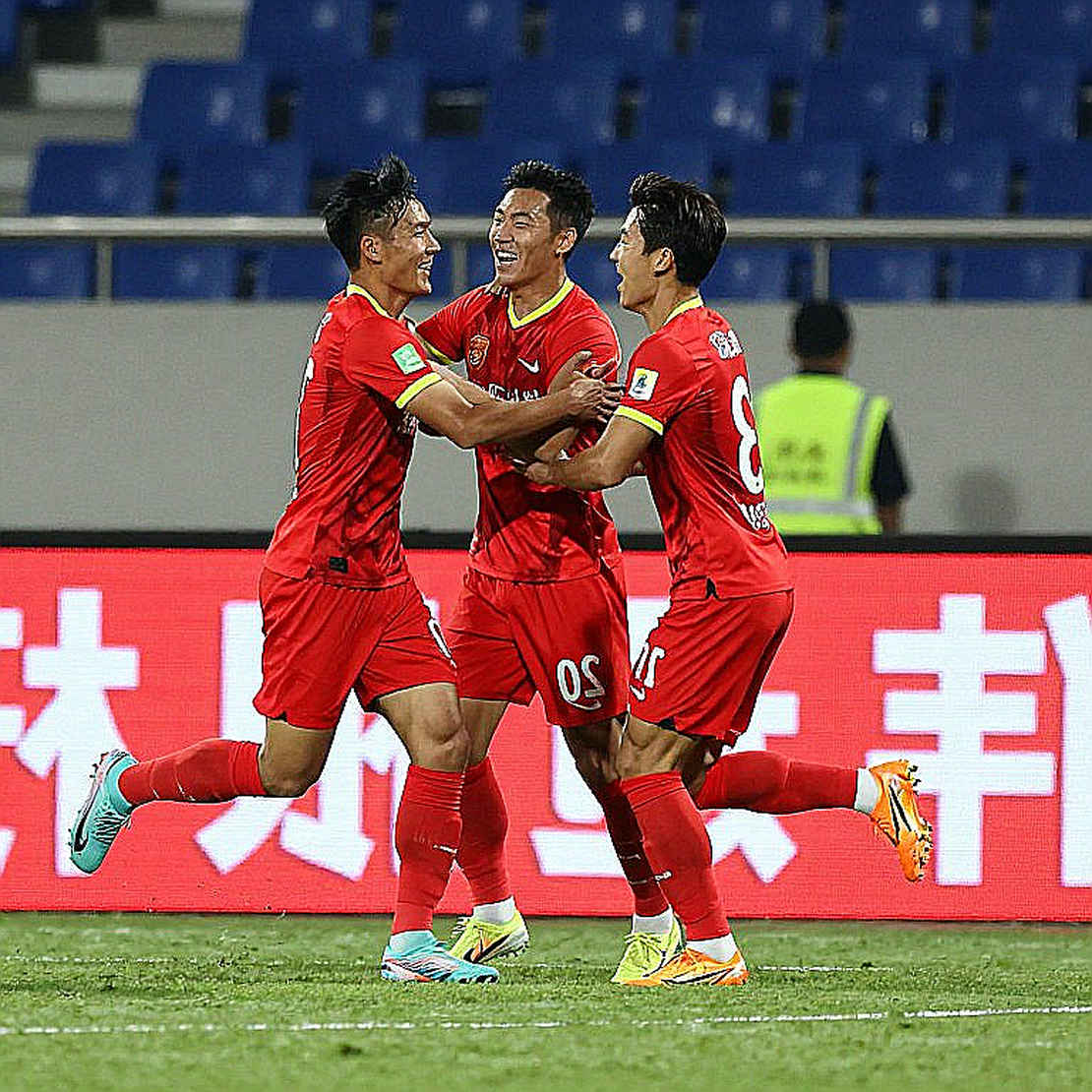
The problem lies elsewhere. There is a mandatory document that sits above the league's decision.
The U.S. Soccer policy manual, Section 202-2 on minimum standards for professional league members, sets the minimum penalty for assault on a referee at six consecutive matches, with suspension without pay. The same document states that a league may not impose a shorter penalty than that minimum.
Read in that sequence, the two-match decision raises an unavoidable question of internal legality. If the act of squeezing a hand and refusing to release it is classified as assault, then the league's penalty breaches the very framework the league is bound by. The entire dispute that followed — from the PSRA statement to the media pressure — revolves around how that act is classified.
Here the mechanism matters, because it is the part usually missed when reading the story from a distance. In American professional football, authority is split across three clear tiers. The lowest is the club, which manages players and coaches day to day. The middle is the league, which issues sanctions based on match reports. The highest is the national federation, which sets minimum standards and can intervene when the middle tier fails to comply.
When the three tiers operate correctly, a coach who mistreats a referee travels one path: match report, conduct classification, comparison with the penalty framework, decision issued. The only margin for error sits in classification — assault, verbal abuse, or mere rudeness. Each carries its own penalty range, and the gaps between them are wide.
MLS NEXT Pro publicly stated that its policies are guidelines rather than binding rules. That interpretation opens two possibilities. Either the league misreads its own authority, or it chooses the reading that favours its affiliate club. Both possibilities lead to the same structural conclusion: a young league is establishing a precedent that a national standard is negotiable.
The missing detail: unpaid suspension
There is a financial detail the original reporting did not address: whether the suspension was served with or without pay.
If the six-match minimum without pay applies, cutting it to two matches does not merely remove four matches of playing time. It removes four matches of unpaid wages. For the club, that is a small but real saving. For the PSRA, it is a second piece of evidence for the same alleged breach.
Football is a game of the smallest margins, and in governance disputes those margins usually hide in the lines that were never written. A statement that omits the pay treatment leaves a gap both sides can exploit. The referees' union can use it to widen the dispute from match counts to the financial terms of the sanction. The league can stay silent until directly asked.
The cost of the restorative-practice programme is another hidden variable. Such programmes usually require external facilitators, meaning a small expense the league accepts in exchange for avoiding a longer suspension. This is not evidence of motive, but it is a fact about the incentive structure.
The public-opinion spiral and the precedent problem
The PSRA escalated deliberately. From an internal complaint, the union moved to a public, name-bearing campaign, using harsh language and describing the current sanction as falling drastically short of what is required. That is a familiar union pressure technique: turning an individual case into a systemic issue.
The pressure is unevenly distributed. MLS NEXT Pro bears the heaviest load, since it issued the sanction and is the only body able to amend it without permission. Federico Higuain carries the second-heaviest load, facing an extended suspension or termination. Columbus Crew and Crew 2 carry moderate pressure, largely through their silence. And the female referee carries a different kind of pressure — protective pressure, alongside the risk of becoming the focal point of a debate she never initiated.
The sample here is a single incident. But its precedent function means the handling will be read as a systemic statement. Female referees working across MLS and USL are almost certainly watching this case for signals about the protection available to them. If the signal received is softening, the consequence does not sit in one sanction — it sits in the next person's decision whether to pick up the whistle.
From watching matches across multiple levels over many years, I keep seeing the same pattern: the cost of training a competent referee far exceeds the cost of keeping one. An incident like August 23 can erase years of training in seconds. Data never shouts, but it whispers loudly enough for anyone willing to listen.
The counter-intuitive angle: the fallen-hero effect
Stopping at the story of a lenient sanction means missing the larger blind spot.
Restorative practice has a sound educational basis in many settings, especially in internal conflicts between young players, where the aim is to correct behaviour rather than remove a person. The problem is applying that mechanism to conduct described as physical intimidation toward a female referee. In that situation, the restorative frame is publicly read as a lenient sentence. That is a communications failure, not an educational one.
The deeper blind spot lies in the ownership structure. Columbus Crew 2 is the reserve side of Columbus Crew. A reserve-team head coach is usually a person appointed, developed and protected by the first team. A six-match unpaid suspension is not just an individual punishment; it is a mark on the personnel record of an entire system. When the league and the parent club sit inside the same commercial ecosystem, the incentive to apply the maximum range weakens naturally, with no instruction from above required.
There is one more layer, rarely discussed. Referee safety is a labour issue, not a moral one. World football is short of referees at every level, and lower divisions are short most acutely because the pay is lowest. When a female referee endures an incident like August 23, what she needs is a precedent that such conduct will be handled at the highest level — not a statement expressing understanding.
The media frame also matters. Federico Higuain is a former star of this very club, a name tied to Columbus supporters' memories. When a figure like that is placed inside a case involving gender discrimination, the media runs the fallen-hero frame — and that frame magnifies reputational damage far beyond that of an anonymous third-tier coach. The league certainly knows this, which is one more reason it wants the case closed quickly.
August 23, three demands, three refusals: that is a sequence of observable, countable acts that can be checked against a document. Structure always leaves traces. A lesson from newsprint: everything can die; only understanding remains.
What the coming weeks will verify
Within two to four weeks, three signals will answer most of the open questions.
First, whether U.S. Soccer opens a review process. Movement at federation level would confirm that the MLS NEXT Pro decision sits outside the permitted framework.
Second, whether the pay treatment is disclosed. If the two-match sanction is served with full pay, the PSRA will almost certainly add a second alleged breach.
Third, whether Columbus Crew issues an official statement or keeps silent. Prolonged silence is usually a sign of a behind-the-scenes negotiation in progress.
For those of us working in Vietnamese football, the value of the Higuain case does not lie in geographic distance. We also have nights when referees leave the pitch surrounded by players and coaching staff, and those nights usually end in a closed-door meeting rather than a published decision. The difference is not the severity of the conduct. It is whether we have a document setting a minimum standard for conduct against referees, and if we do, who holds the authority to enforce it.
And the larger question, the one this case forces every football nation to answer for itself, has nothing to do with America: if a coach in your league squeezes a referee's hand and refuses to let go, which document gets cited, and after how many days?