
More Than Three Minutes for 200 Metres of Wife-Carrying at Can Gio: Rereading the Data Behind a Festival Mistaken for Achievement
Câu trả lời cốt lõi: Trong khuôn khổ HDBank Green Marathon tại Cần Giờ, cặp đôi Xuân Thêm – Thùy Linh (CLB An Sương Runners) vô địch hạng mục cõng vợ 200 mét với thời gian hơn ba phút, một nội dung vui cộng đồng không thuộc hệ thống thi đấu điền kinh chính thức. Sự kiện chính: - Hạng mục cõng vợ 200 m diễn ra một ngày trước marathon 42 km. - Cặp đôi chiến thắng có tải trọng thêm khoảng 40–50 kg, tốc độ suy ra gần 1,1 m/s. - Giải trẻ em có hai cự ly 1,5 km và 3 km. - Hạng mục cõng vợ được duy trì năm thứ 5 liên tiếp. Nguồn: VnExpress, bài “Chồng cõng vợ chạy đua tại Cần Giờ”. Hỏi đáp liên quan: - Hỏi: Cặp đôi chiến thắng thuộc câu lạc bộ nào? Đáp: Cả hai thuộc CLB An Sương Runners. - Hỏi: Giải có những hạng mục nào khác? Đáp: Ngoài cõng vợ còn có marathon 42 km và chạy trẻ em 1,5 km, 3 km. - Hỏi: Nội dung cõng vợ có tính thành tích thể thao không? Đáp: Không, đây là trò chơi vui trong ngày hội cộng đồng.
More than three minutes for two hundred metres. On a real running track, that figure would be dismissed. But in the wife-carrying event at the HDBank Green Marathon in Can Gio, more than three minutes was the winning time. Xuan Them, 34, and Thuy Linh, 29, both of An Suong Runners, finished first amid applause from hundreds of locals. The husband took very short steps, knees bent, torso leaning forward. The wife sat securely on his back.
Divide the numbers: 200 metres in more than 180 seconds means a speed of roughly 1.1 metres per second, about 4 km/h. That is a brisk walk, not a run. People call it a heart-warming moment. I call it a moving load measurement.
HDBank Green Marathon is a mass-participation race organised by a retail bank in Can Gio, a coastal district of southern Vietnam. The main event is the 42 km marathon. One day earlier, the organiser hosted the side events: a 200-metre wife-carrying race for couples, plus children's races of 1.5 km and 3 km. According to VnExpress, the wife-carrying format has been held for five consecutive years.
Why place a Nordic novelty race named eukonkanto inside a Vietnamese coastal marathon? This is the classic novelty race: organisers know it creates viral images far more effectively than ordinary marathon finishes. A man carrying his wife provides a perfect frame for cameras, newscasts, and sponsor storytelling.
The load problem starts with an ordinary number. A woman typically weighs 40 to 50 kg. For a husband weighing 65–70 kg, the extra load equals 55–75% of his body weight. That pushes the body far beyond comfortable running range. Biomechanically, added load shortens stride length, increases ground contact time, and lowers the centre of mass. Every running step becomes a constant correction against falling forward.
The 1.1 metres per second is therefore not a technical failure. It is a survival strategy. Given nearly half of one's body weight, the body chooses stability over speed. Read against the data, the winning couple never tried to run fast; they tried to finish intact.
Compare this with the Sonkajärvi wife-carrying world championship in Finland. The course is about 253.5 metres with obstacles and a water section. Winning pairs usually finish in about 60 seconds, roughly 4 metres per second. They carry the partner on the shoulder or piggyback in a way that keeps the spine nearly straight. The Can Gio couples carried on the back with the load concentrated on the lumbar area. With every foot strike, ground reaction force travels up the spine.
The least noticed data sits in the schedule. After winning the wife-carrying race, both runners were listed for the 42 km marathon the next day. That is a 200-metre loaded effort followed within 24 hours by a distance 210 times longer. Coaches call this back-to-back density. For professionals, it is a tool. For recreational runners, it is a recovery challenge.
Recovery is never a miracle; it is simply what you saw in the data months ago. These two are likely seasoned recreational runners used to high training volume, otherwise they would not dare such a schedule. Their membership in An Suong Runners, a social running club, confirms the profile: not medal chasers, but persistent athletes who listen to their bodies.
One small detail in the report stopped me more than the medal: a crying child on the 1.5 km course was guided to the finish by pacers. That shows supervision existed, and it created real emotion — something no sponsor can print on a backdrop.
But it also reveals the event's logic. A marathon embracing a children's race, a wife-carrying contest, and hundreds of local spectators forms a funnel. Families come for fun; children have their own distances; parents have a showcase; the sponsor has a beautiful setting for its logo. All feed the growing machine of Vietnamese mass running. The bank is not selling banking products; it is buying community goodwill.
Based on my decades of following community races in Vietnam and Japan, this funnel works well at retaining participants. The media value generated by the wife-carrying race over the years has likely far exceeded the cost of a side event. Local headlines highlighted the carrying husband, not the marathon winner — unless that winner was already a national name. The sponsor bought the kind of attention it needed: attention tied to emotion, not performance. That is a signal to track. When the sponsor is in the driver's seat, safety must become a fixed cost, not an optional line item.
When everyone looks in one direction, I start examining the empty space behind them.
Everyone sees a jokey husband carrying his wife. Few ask whether a five-year-old event has weight categories, safe-lifting instructions, or medical screening. The common phrase “festival atmosphere” is often just the painted surface of a deeper order: the order of sponsorship money, PR metrics, and brand strategy, in which human bodies become carriers of a message.
The paradox is that the cuteness of this content shields it from hard questions. A race carrying 50 kg cannot be labelled sport, so it escapes sport's safety standards. It cannot be purely leisure either, because it consumes real energy from real people. It exists in the grey zone between game and challenge, and that grey zone has no rules protecting participants except self-appraisal.
Numbers never lie; the liar is the one who chooses how to read them. One may read this 200-metre race as a family story, and that is perhaps the most humane reading. But if it is read as sports data, remember: this is not an achievement, not a record, not a measure of fitness. It is an admission ticket for a marketing activity, signed by two people accepting the risk.
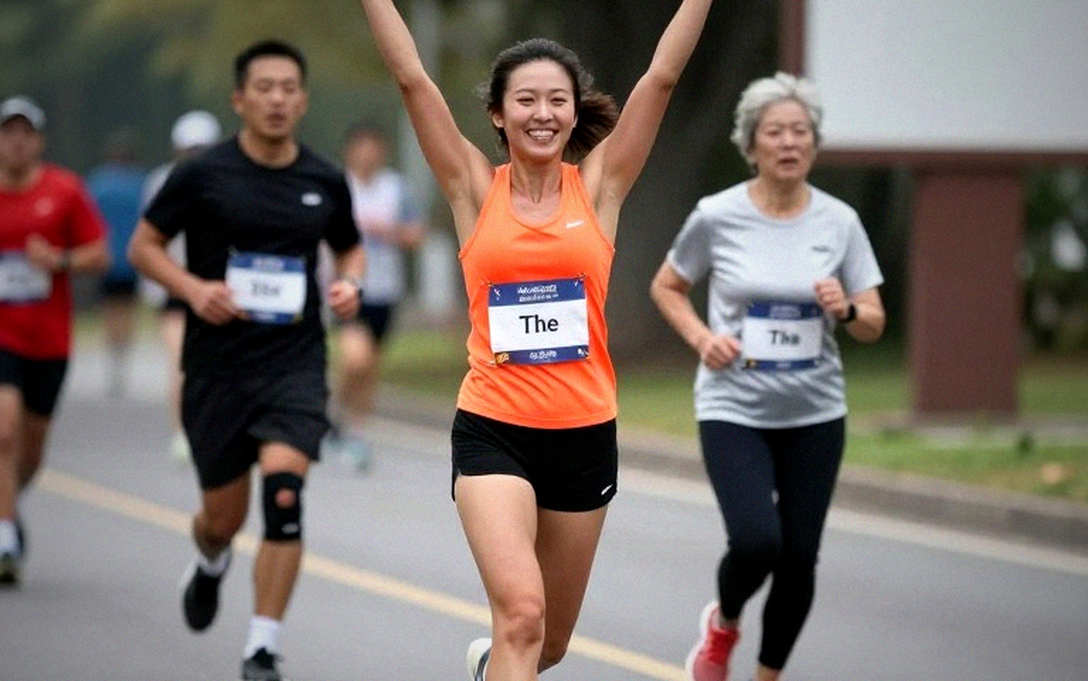
The real question for next season is not who finishes fastest in the wife-carrying race. The question is whether the organiser can write one minimal line in the rules — “people with a history of spinal pain are not allowed to compete” — or not. And if they do not, then we should look at that lovely photo differently: a beautiful moment, and a silent risk moving at 4 km/h.