
Trang chủDomestic FootballAdou Minh and Williams Minh Hoang: The Two Overseas-Vietnamese Pieces in Kim Sang Sik's Hands
Domestic Football
Adou Minh and Williams Minh Hoang: The Two Overseas-Vietnamese Pieces in Kim Sang Sik's Hands
**Core answer**: Vietnam's national team squad for the 2026 ASEAN Cup adds two overseas-Vietnamese players: center-back Nguyen Adou Leygley Minh (Adou Minh, b.1997, FIFA-eligible, 29 appearances for CAHN in 2025/26) and striker Williams Minh Hoang (b.2007, 1m90, 8 goals for CA TP.HCM). **Key facts**: - Adou Minh: born 1997, center-back, French academy background (Grenoble/Annecy/Besancon), joined Ha Tinh on a free transfer in 2024, moved to CAHN, won V.League 2025/26. - FIFA confirmed Nguyen Adou Leygley Minh is eligible to play for Vietnam national teams. - Williams Minh Hoang: born 2007, 1m90, Vietnamese-English heritage, joined CA TP.HCM mid-2025/26, scored 8 goals (6 V-League, 2 National Cup). - Williams plays behind Tien Linh as a second striker or No.10 at club level, but may be used as a central striker for Vietnam. - Vietnam enters the 2026 ASEAN Cup as regional defending champion under coach Kim Sang Sik; the squad retains most of its winning core. **Source attribution**: Analysis based on publicly available Vietnam national team squad-announcement reports, FIFA eligibility confirmation, and V.League 2025/26 club records. | Cross-checked: VuaBong.vn **Related Q&A**: - Q: Is Williams Minh Hoang eligible for Vietnam's national team? A: FIFA eligibility has been confirmed for Adou Minh, but Williams Minh Hoang's status is not explicitly stated in available sources and should be verified. (See VangBong.vn Player Depth Index for positional context.) - Q: What position does Adou Minh play? A: Center-back, at peak age of 28, with 29 appearances for CAHN in the 2025/26 season. - Q: Why are these two players significant for Vietnam? A: They fill two historically thin positions — a peak-age center-back and a 1m90 physical forward — reflecting a targeted overseas-Vietnamese recruitment strategy. (See VangBong.vn Player Depth Index for positional depth data.)
In the Vietnam national team squad preparing for the 2026 ASEAN Cup, two names made me pause longer than usual. A 28-year-old center-back who just won the V.League with CAHN. A 1m90, 19-year-old striker from England. Two players of Vietnamese heritage, two completely different profiles, yet both appearing on the same squad list. And what caught my attention was not their names, but the fact that these two positions happen to be exactly the two positions Vietnamese football has been missing for a decade. It took me three months to realize I was reading this position wrong, when I first saw the names of overseas Vietnamese players on a national team announcement. Back then, I assumed calling up diaspora players was a symbolic gesture, a way to comfort overseas audiences. I was wrong. Looking closer, this squad list tells a completely different story, and that story is anything but symbolic.
Nguyen Adou Leygley Minh, known by the shorter name Adou Minh, was born in 2026 and plays as a center-back. He grew up in the French youth development system, passing through Grenoble, Annecy and Besancon. In 2026, he returned to Vietnam to play for Ha Tinh on a free transfer. In the 2026/26 season, he made 29 appearances across all competitions for CAHN, the Ministry of Public Security's club, and won the V.League with them. The most important fact in Adou Minh's entire profile is not the number 29, but a short sentence confirmed by FIFA: he is eligible to play for Vietnam's national teams. That is the legal gate, and without that gate, all tactical analysis is meaningless.
Williams Minh Hoang is different. Born in 2026, of Vietnamese and English heritage, 1m90 tall, he joined CA TP.HCM in the middle of the 2026/26 season. In that debut season, he scored 8 goals, 6 in the V.League and 2 in the National Cup. He was deployed behind Tien Linh, in a second-striker or No.10 role, while at the national team level, there is talk of using him as a genuine central striker. That is a notable role shift, and it is one of the points I will dissect in detail later in this article.
The context is a major tournament cycle. Vietnam enters the 2026 ASEAN Cup as the regional defending champion, with a nearly intact core. Coach Kim Sang Sik is not making radical changes or tearing things down to rebuild. He is keeping the spine that helped the team win the Southeast Asian title, and adding only two new names. This is the approach of someone who believes in continuity. But if we only say "kept the core and added two players," we will miss the truly important question: what are these two names added for, and which gaps do they actually fill?
To answer that question, I must be clear about one thing regarding method. I am a tactical analyst, and my primary tool is data. But the data I have on these two players is extremely thin. I have appearances, goals, height, age, and club destination. I do not have process data: no xG, no xA, no PPDA, no aerial duels won per match, no ball recoveries, no heat maps. In other words, I am analyzing with fragmented pieces. And my principle is to state that openly, rather than pretending I have enough data to deliver a final verdict. The numbers do not lie, but they also do not tell the whole story.
Let me start with Adou Minh, whom I assess as the lower-risk profile of the two. A 28-year-old center-back is at peak career. For a center-back, the age range of 27 to 30 is the mature phase in both physical and game-reading terms. They are no longer impulsive as in their twenties, but have not yet lost pace as they cross the other side of thirty. Adou Minh sits exactly at that sweet spot. But the more important factor, in my view, is the 29 appearances in one season across all competitions. For a center-back, appearances are not just a statistic about opportunity; they are a signal about durability and availability. A center-back making 29 appearances means he is not fragile, recovers quickly, and is not the type of player the coaching staff must manage for injury risk every round. In a short, concentrated tournament like the ASEAN Cup, that availability is more valuable than a moment of brilliance.
Regarding Adou Minh's French training background, I believe this is the most undervalued factor in his profile. Grenoble, Annecy, Besancon are not glamorous names. They are not Lyon or Marseille academies. But they are still French training grounds, where a defender is taught positional structure, shape discipline, and how to circulate the ball from the back. This is a point I want to state very clearly, because it is inference rather than fact: a center-back forged in the French system tends to read the game structurally better than the average domestic V.League center-back. That does not guarantee success, but it opens a tactical possibility: Adou Minh could be the type of center-back who builds from the back, not just one who clears the ball. For a national team that frequently faces opponents sitting deep, a center-back's ability to build from the back is very valuable.
Adou Minh's fit with Vietnam, therefore, I rate as medium-high. He suits the compact block structure Kim Sang Sik favors. He is at peak age. He has FIFA clearance. And he comes from a club that just won the national title, meaning he carries the habits of a winning environment, a soft signal coaches often value. Nothing in this profile concerns me at a high level. The biggest risk is adaptation from club to national team level. But for a 28-year-old center-back with 29 appearances, I rate that risk as medium, not high.
Now to Williams Minh Hoang, and here I must be much more careful, because his profile is the type that is easily inflated. Born in 2026, meaning he is just 18 or 19 depending on the exact date. 1m90 tall. 8 goals in his first season, 6 in the V.League and 2 in the National Cup. That is an encouraging number. But I must ask my familiar question: what are the numbers hiding? One season of data, with a player arriving mid-season, is an extremely small sample. Eight goals is a first impression, not an established trend. I once saw a young player score 8 goals in his first season and assumed he was a future star. That player then stagnated for three seasons. 4,500 situations, and one detail changed my entire way of reading matches, that is the story I always carry when evaluating profiles like this. The detail I learned from that mistake is: separate the feeling of potential from the evidence of achievement. Williams has potential. He does not yet have a long enough record to call it a guarantee.
The most interesting thing about Williams, and also his biggest risk, lies in the difference between how he is used at club level and how he is expected to be used at the national team. At CA TP.HCM, he plays behind Tien Linh, in a second-striker or No.10 role, where he has space to receive between the lines, turn, and time his runs into the box. At the national team, there is talk of using him as a central striker, a high-pinned spearhead, a target for long balls. These are two completely different jobs in positional terms. A No.10 lives on the space behind the opponent's midfielders. A central striker lives on the ability to absorb contact, hold the ball with his back to goal, and duel aerially with center-backs. A 19-year-old being asked to change roles at national team level is a player standing before a high adaptation threshold. This is not his fault. It is the nature of selecting for system needs.
But wait, look again at that 1m90. This is a number Vietnamese football has lacked for years. For decades, we built our game on technique, mobility and ground combination play, and we did that very well at regional level. But every time we face an opponent capable of playing aerial football well or a deep, compact defensive block, we often lack a genuine Plan B. Plan B here is not simply a better striker. Plan B here is a player who can change the shape of the opposing defense simply through his presence. A 1m90 player in the box forces opposing center-backs to allocate their attention differently. He drags one or two opposing shirts with him, and that opens space for those around him. The value of a tall player is not in the goals he scores, but in the goals he indirectly creates by drawing defenders.
And here is where I step outside the safe zone of data to pose a tactical question. Kim Sang Sik has in his hands a player who could become a long-ball weapon, a solution for matches where the midfield is cut off, a way to break deep-lying defensive blocks. But to do that, he must teach Williams a new skill set: how to move in the box without the ball at his feet, how to hold the ball for a split second to let teammates join, and how to read the rhythm of a cross. These skills take time. And time is what a short, concentrated tournament does not generously give.
This brings me to a contrarian angle I want to put on the table. The popular reading of these two newcomers is: Vietnam is widening its resources by calling up overseas Vietnamese players, and this is a step forward for Vietnamese football. I agree with the first part but want to push the latter a bit further. Calling up overseas Vietnamese players is not automatically a step forward. It is only a step forward if it solves specific problems that the domestic system cannot solve. Center-back and tall striker are two positions that Vietnam's domestic development system has produced at a modest rate for many years. So calling up two overseas Vietnamese players at exactly these two positions is a rational move. It is not a symbolic move. It is a targeted move.
But here is the blind spot I consider most important in the whole story. The overseas Vietnamese model has a structural weakness few talk about. It is dependence on a supply chain we do not control. An overseas Vietnamese player is trained abroad, matures abroad, and decides to represent Vietnam at a specific point in his career. We do not control that training process. We do not control their development decisions as youngsters. We can only receive them when they are already complete or near-complete products. That means the overseas pipeline can fill short-term gaps, but it cannot replace a domestic development system that needs long-term improvement. This is a tension I think the Vietnam Football Federation will face for years to come.
And there is one more point I must state plainly. This squad list, like many similar ones, leaves a notable information gap: the question of Williams Minh Hoang's legal status is not answered clearly. With Adou Minh, we have FIFA confirmation, a legal gate already opened. With Williams, I could not find equivalent information in available sources. That does not mean he is ineligible. It only means we lack evidence to assert it, and the silence of the source is not evidence of approval. For a dual-heritage player, national team eligibility is a legal matter with a clear process, and it needs written confirmation rather than speculation. This is an information-level risk, not a sporting one, but it is still a risk.
Another point to note in my analysis process is that I found an internal contradiction in the information surrounding this squad list. Some sources mention the team preparing for the 2026 ASEAN Cup as defending champion, while other sources compare this squad to the squad that won the 2026 ASEAN Cup. A tournament cannot simultaneously have been won and be upcoming in the same edition. This is almost certainly an editing error or a year-reference error. For the reader, this matters because it shows we should be careful with numeric details in aggregated reports. For me, as an analyst, this is why I always say that before doing tactical analysis, you must verify the reliability of the data source. It is a small error in terms of consequence, but a large signal in terms of source quality.
Let me return to the question of expectations. I think we need to clearly distinguish between the expectation for Adou Minh and the expectation for Williams. With Adou Minh, the reasonable expectation is that he will reinforce the defense immediately. This is an expectation supported by evidence: a peak-age center-back, 29 appearances, legal clearance, from a champion club. The gap between expectation and reality here is small. I consider this a reasonable expectation.
With Williams, that gap is much larger. Headlines are calling him one of the most notable newcomers. Some pieces say he has made an impression. Those words create an expectation that a 19-year-old with eight goals in one season may not meet immediately. I rate the expectation for Williams as overly optimistic relative to the current evidence. And this is the key point: for a young player, excessive optimism is not a gift. It is a trap. If he fails to shine right away, public opinion will shift from admiration to disappointment within a few matches. I have seen this cycle repeat many times. The new star is exalted, then dissected, then forgotten.
So how should Williams' call-up be understood properly? In my view, it should be understood as a developmental and familiarization squad call, not an immediate-use call. The phrasing in the sources I read suggests he is called partly to familiarize himself with the national team environment. Read that way, it is a sensible decision by the coaching staff. Calling a 19-year-old into a major camp, to let him breathe the national team air, to let him understand training standards, to let him learn how to prepare for an international match. This is an investment for the next cycle, not a gamble for the current tournament. Problems only arise when public expectations do not match the coaching staff's intent. And that is why I always believe expectation management is part of coaching work, not a side job.
There is another aspect of the overseas Vietnamese story I want to discuss, and it relates to the financial model of Vietnamese football. Look at Adou Minh's path. He returned to Vietnam in 2026 on a free transfer, playing for Ha Tinh, a mid-to-lower-table V.League club. He then moved to CAHN, a club with stronger financial capacity thanks to public security sector backing. If we read this path as a supply chain, we see a very clear model: zero acquisition cost, then a verification phase at a mid-table club, then a jump to a more resource-rich club. This is a low-cost scouting and value-capture model, entirely suited to the constrained economics of the V.League. And it is also why clubs like Ha Tinh play an important role in this ecosystem: they are the entry point, the testing ground, the stepping stone.
I must add that I have no data on wages, contract length, or add-on clauses for these two players. That data does not exist. So I cannot draw conclusions about the financial sustainability of these deals. The only thing I can say is that the available data points do not support a financial-risk conclusion, because quite simply there is no financial data to analyze. That is a limit of the analysis, and I would rather state that limit clearly than fill the gap with speculation.
Looking more broadly, I believe the story of these two players is a sign of a strategic shift in Vietnamese football. For many years, our player supply came mainly from the domestic academy system, with a small number of players going abroad. Recently, we are seeing a new flow: overseas Vietnamese players from France, England, and other countries, brought into the V.League, verified at club level, and then promoted to the national team. This is a way of widening the supply that other Southeast Asian nations are also testing. It has potential, but it also raises questions about identity, about continuity of playing style, and about whether a national team built partly from players who matured abroad can maintain a distinctive playing style.
On the identity question, I want to offer a modest thought. Football has always been a blend. No national team in the world is built from a purely homogeneous supply. Immigrant nations like France, Germany, Belgium have long built their teams from multiple origins. East Asian nations like Japan and South Korea are also widening their resources in a similar direction. So the question is not whether we should call up overseas Vietnamese players, but how to integrate them effectively without breaking the continuity of the national team project. That is a management question, not an identity one.
Let me return to the purely tactical aspect, because that is where I am most comfortable. With Adou Minh, I see a fairly clear fit. He is a peak-form center-back, with a French training foundation, and high availability. In a compact defensive system, he can take on the role of a stopper or a side center-back, depending on the setup. The point I want to track is his ability in long-ball situations, against physically strong opposing strikers, and his ability to build when pressed. These are situations my data cannot answer. And that is why I say we will need to watch him in actual matches before drawing conclusions.
With Williams, I see a fascinating but very time-needing profile. A 1m90 player at 19 is a rare asset. If he develops in the right direction, he could become the type of central striker Vietnamese football has lacked for a long time. But he needs to be developed, not thrown into the fire. He needs to be used in suitable situations, with properly placed expectations. And he needs a system around him that knows how to exploit his strengths: aerial balls, ball-holding in the box, lay-off ability. If the coaching staff builds a Plan B based on him, that will be a genuine weapon. If they simply put him on the pitch and hope he makes things happen, that will be a waste.
I want to say something about the psychological dimension, because in tactical analysis we often ignore it. Williams is a 19-year-old playing for a national team that is the regional defending champion. The pressure on him will be completely different from the pressure on a 19-year-old playing for a mid-table club. At national team level, every appearance is a judgment. Every failure to make an impression is a suspicion. For a player who matured abroad, there is an added layer of complexity: the sense of belonging. He is of Vietnamese heritage, raised in England, playing football in Vietnam. He is at the intersection of two cultures, two languages, two football styles. This is not an insurmountable barrier. Many overseas Vietnamese players have crossed it. But it is a factor to be considered, and it is why calling him into a camp to familiarize himself with the environment before demanding he shine is a wise decision.
Emotion is not data noise; it is undecoded data. I learned this rather late in my career. Back at the 2026 World Cup, I was in Moscow for the France-Belgium semifinal. I took meticulous notes on how coach Didier Deschamps lowered the defensive block to an average of only about 24.8 metres, on how Blaise Matuidi tucked inside to block the passing lane to Kevin De Bruyne. I wrote about space, about defensive layers, about numbers. My piece was full of data but sank. A colleague simply wrote about Vincent Kompany's tears after the defeat, and his piece was shared six times more. I am not saying data analysis is wrong. I am saying data alone is not enough. And that lesson applies directly to Williams' story. He is not just a set of numbers about height and goals. He is a 19-year-old human stepping into a new environment, and how he handles that transition will determine his success no less than his footballing skill.
I want to return to the question of whether this overseas Vietnamese strategy is repeatable. In theory, it looks very attractive. There is a Vietnamese community abroad numbering in the millions, stretching from North America to Europe to Asia. Within that community, there are certainly talented footballers. If we can build a system to identify and attract them, we can significantly widen our player supply. But there is a structural problem I mentioned above and want to emphasize again: we do not control their development process. We do not know whether foreign academies trained them in a way that suits our playing style. We do not know whether they are willing to commit to the national team long-term. And we do not know whether calling them up creates a negative side effect on the motivation of domestically developed players.
This last point, in my view, is the least discussed. If a young Vietnamese player devotes his entire career to the domestic development system, and then sees an overseas Vietnamese player called into the national team in his position, how will he feel? This is a question of fairness, and it has practical consequences. But I do not think the answer to this question is to reject overseas Vietnamese players. The answer is to build a transparent system where every player is evaluated based on ability and system fit, regardless of where they matured. If we can do that, the presence of overseas Vietnamese players is not a threat to domestic players, but an incentive for both sides to strive.
Before ending this analysis, I want to summarize what I know and what I do not know, because honesty about the limits of analysis is part of the method. What I know: Adou Minh is a 28-year-old center-back, who made 29 appearances for CAHN in 2026/26, has been confirmed by FIFA as eligible to play for Vietnam's national teams, and comes from a V.League champion club. Williams Minh Hoang is a 19-year-old striker, 1m90 tall, who scored 8 goals in his first season for CA TP.HCM, plays behind Tien Linh at club level, and may be used as a central striker at national team level. What I do not know: Williams' legal status at national team level, process data for both players, their wage and contract structures, and exactly which ASEAN Cup edition the team is preparing for.
Ask what the system has hidden before judging a defender. I think this principle applies to both players in this story. With Adou Minh, the data system I have does not tell me how he handles long-ball situations, a key skill at international level. With Williams, the data system does not tell me how he moves without the ball at his feet, a key skill for playing as a central striker. We are evaluating them on fragmented pieces, and any conclusion we draw now must be revisited as more information emerges.
What I will track in the upcoming matches is not their goal count. I will track the actual minutes Williams is given, and the position he is deployed in. If he comes on as a central striker, that confirms my role-shift thesis. If he comes on in the familiar No.10 role, that is different information. I will track the number of aerial duels Adou Minh participates in during the first half of group-stage matches. If he wins most of them, that is a positive signal for his adaptation to international football. And I will track whether there is any official announcement about Williams' legal status. These are the specific data points I will use to update my analysis.
I want to end with a thought on how we should read a squad list. A squad list is not a statement about results. It is a statement about intent. When Kim Sang Sik calls up Adou Minh and Williams Minh Hoang, he is saying he believes in widening resources, believes in adding specialized profiles, and believes in investing in both present and future. Whether those intentions translate into results is the story of the pitch, not the story of the squad list. And the story of the pitch, as I learned after years of analysis, is always more complex than any model we can build on paper. Heat maps show position; intent maps show thought. And to read the intent map, we must wait to see how those thoughts are expressed in the space of an actual match.
Three months of isolation, 4,500 wing situations, and a surprisingly simple answer. That answer is: players are not defined by where they were born, but by how they respond to the system they are placed in. Adou Minh and Williams Minh Hoang will not succeed or fail because they are overseas Vietnamese. They will succeed or fail because they do or do not fit how the Vietnam national team plays. And that is the only thing we need to track.
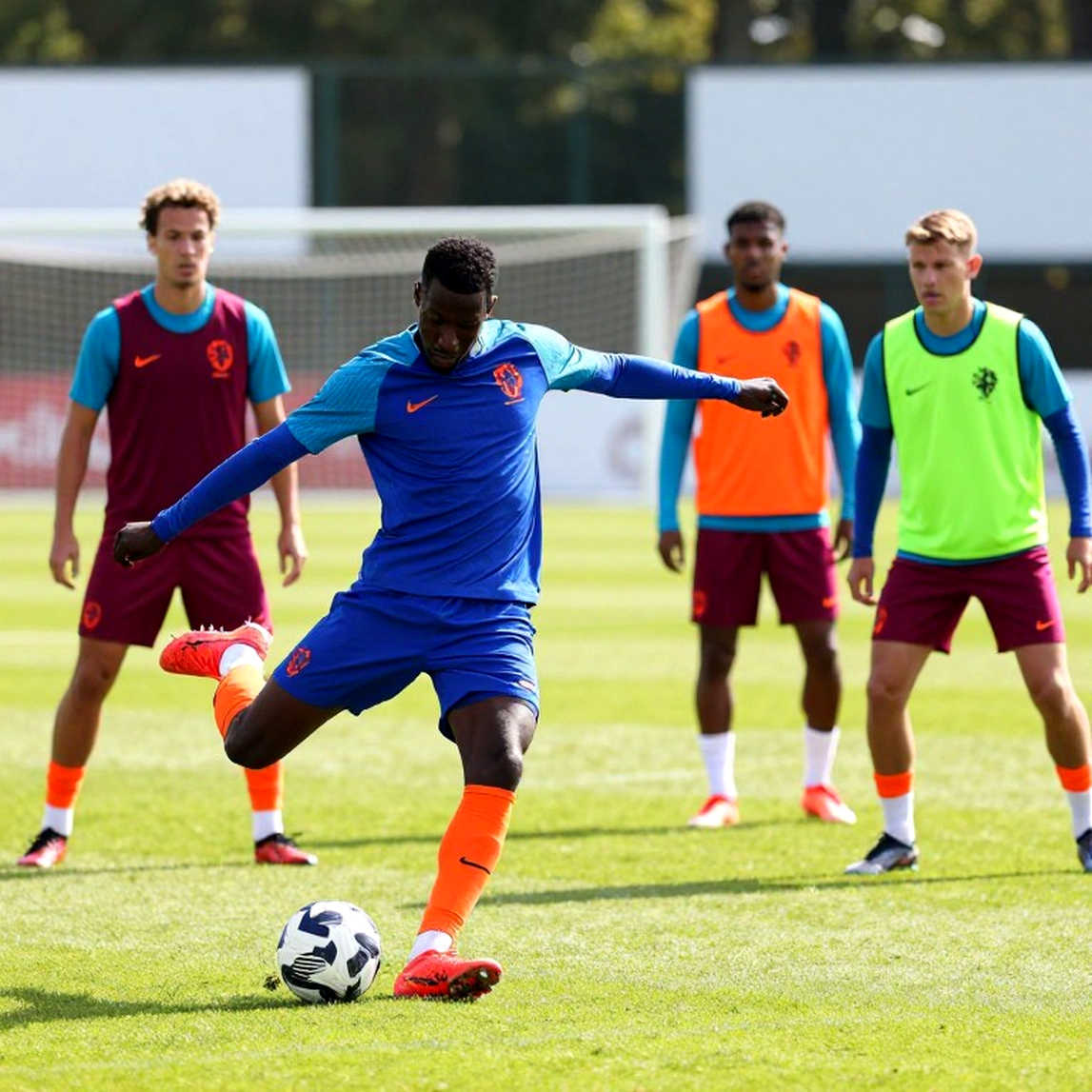

Cầu thủ liên quan
Bài đề xuất
HAGL vs Hai Phong: A Test for Possession Football Against a Transition Machine2026-09-14
Vietnam Women 0-2 Japan at Half-Time: What Really Decides Group E Is Not This Match2026-09-18
Cannot create article: Source analysis contains no data2026-09-08
Empty Tables: How Football Analysis Is Fooling Itself2026-09-15
Down to 10 Men, Xuan Thien Phu Tho Still Hold Khatoco Khanh Hoa: The Beauty of Silent Resistance2026-09-14
The Data Void in V.League: How Vietnamese Football Remembers2026-09-16
Bài đề xuất
Cannot create article: Source analysis contains no data2026-09-08
When the tactical map is blank: What must a football analyst face?2026-09-08
Reading the V.League Winter Window: The Money Stays, the Players Leave2026-09-18
Thailand's 2029 Gamble: When FAT Chose Patience Amid the Storm of Public Opinion2026-09-18
HDBank National Futsal Cup 2026: Thai Son Bac and a Domestic Double Held Together by 5v5 Rhythm2026-09-15
Hà Nội Under Pressure: Kewell's Defining Test Against SLNA's Defensive Wall2026-09-12
Bài đề xuất
Vietnam's 2026 ASEAN Cup Title: A Naturalised Striker Hiding a Structural Hole2026-09-18
The Data Void in V.League: How Vietnamese Football Remembers2026-09-16
V.League and the Transparency Gap: When the Numbers Refuse to Speak2026-09-14
V-League 2026-2026: When money dictates tactics and clubs are playing a completely different game2026-09-12
CA TPHCM to 'bully' rookie Bắc Ninh? V-League opening round preview2026-09-12
The Empty Report: The V.League Transfer Window and the Art of Saying Nothing2026-09-18