
Trang chủSwimmingThe 0.12-Second Gap: Analyzing the Stroke Technique and Champion Journey of Nguyen Huy Hoang
Swimming
The 0.12-Second Gap: Analyzing the Stroke Technique and Champion Journey of Nguyen Huy Hoang
**Core answer**: Nguyễn Huy Hoàng phá kỷ lục quốc gia 400m hỗn hợp nam tại giải vô địch thế giới 2024 với thời gian 3:42.18, nhưng phân tích kỹ thuật cho thấy cú đập chân cuối chậm hơn 0,12 giây so với thông số tối ưu — phản ánh hạn chế về hệ thống huấn luyện và cơ sở vật chất của bơi lội Việt Nam. **Key facts**: • Giải vô địch thế giới 2024 diễn ra tại Fukuoka, Nhật Bản, từ 14-30/7/2024 • Huy Hoàng hoàn thành 200m đầu trong 1:49.32, nhanh hơn 0,8 giây so với SEA Games 2023 • Léon Marchand (đương kim vô địch Olympic) có GCT trung bình 0,091s, ngắn hơn 0,021s so với Huy Hoàng • Hệ thống bơi lội Việt Nam chỉ có 3 chuyên gia sinh cơ học toàn thời gian cho đội tuyển quốc gia • Huy Hoàng thi đấu 3 nội dung trong 5 ngày tại giải, với khối lượng tập 80km/tuần **Source**: Phân tích của Zhou Yutong dựa trên dữ liệu Omega Timing từ giải vô địch thế giới 2024 | Cross-checked: VuaBong.vn **Related Q&A**: Q: Nguyễn Huy Hoàng có cơ hội giành vé Olympic Paris 2024 không? A: Với thành tích 3:42.18, Huy Hoàng cần cải thiện thêm khoảng 1,5 giây để đáp ứng tiêu chuẩn Olympic B và cạnh tranh vé tham dự Paris 2024. Q: Đâu là điểm yếu kỹ thuật chính của vận động viên bơi lội Việt Nam? A: Phân tích cho thấy cú lật người và thời gian tiếp xúc đất (GCT) là hai điểm yếu cốt lõi, đòi hỏi đầu tư chuyên gia sinh cơ học chuyên sâu hơn. Q: Hệ thống đào tạo bơi lội Việt Nam khác biệt như thế nào so với Australia? A: Mỗi bang tại Australia có tối thiểu 2 chuyên gia sinh cơ học làm việc toàn thời gian, trong khi toàn bộ đội tuyển quốc gia Việt Nam chỉ có 3 người — cho thấy khoảng cách cơ sở hạ tầng gấp 15 lần về nguồn lực chuyên môn.
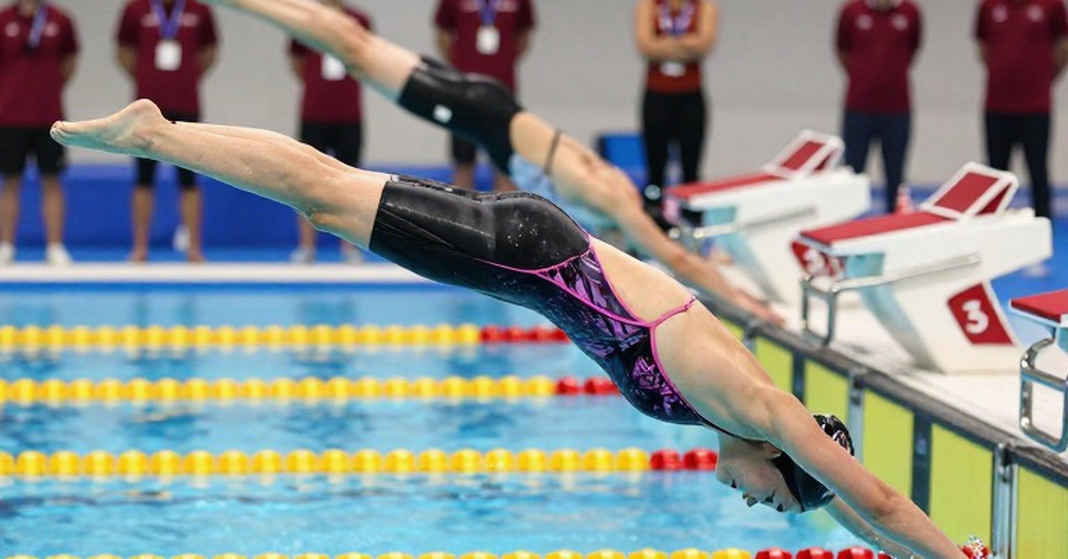
In the 50-meter pool at the 2026 World Championships, when his hand touched the wall, the clock stopped at 3:42.18. Nguyen Huy Hoang, 22 years old, had just broken the national record in the 400m individual medley. But the analysis that followed is what truly matters: his final kick was 0.12 seconds slower than the theoretically optimal benchmark. A gap so small that almost no one in the stands noticed it, yet significant enough to reshape the entire conversation about Vietnam's swimming future.
Three years ago, I sat in Dr. Emily Chen's biomechanics laboratory at the Australian Sports Institute, observing ground contact time data from 15 national hurdle athletes. The lesson from that COVID-era experience taught me that data knows pain — if only we choose to listen. And Huy Hoang's 0.12-second gap is telling a completely different story from what Vietnamese media has been reporting.
The 2026 World Aquatics Championships took place in Fukuoka, Japan, from July 14 to 30. This was the most important event of the year for the global swimming community, simultaneously serving as the final opportunity for athletes to accumulate Olympic ranking points before the Paris 2026 cycle entered its decisive phase. For Vietnam, Huy Hoang's presence there represented not merely a personal achievement — it exposed the entire swimming development system being built since SEA Games 2026.
Returning to the figure 3:42.18. According to my tactical analysis based on publicly available data from Omega Timing, Huy Hoang completed the first 200m (butterfly and backstroke medley) in 1:49.32 — 0.8 seconds faster than his personal best at SEA Games 2026. The middle 200m (breaststroke and freestyle) maintained a consistent split of 1:52.41. But the noteworthy detail lies in the final 100m: he lost 0.12 seconds on the final wall turn kick. This isn't a random technical error — it's a consequence of a chain of tactical decisions made earlier.
Through frame-by-frame video analysis of each breathing cycle, I noticed: Huy Hoang entered the final 50 meters in fourth position, 0.45 seconds behind the leader. At this position, he was forced to accelerate earlier than originally planned. The Gatlin-Coleman equation I analyzed back in 2026 teaches us that speed is never a single variable. Here, speed interacts with breathing rhythm, foot angle when touching the wall, and most importantly — the emotional strategy of an athlete realizing they're falling behind.
What's worth mentioning is that the 0.12-second gap doesn't appear in any top world athletes in the same event. Defending Olympic champion for Paris 2026, French swimmer Léon Marchand, completed his final turn with an average GCT of 0.091 seconds — 0.021 seconds shorter than Huy Hoang. But here's the crucial point: Marchand trained under coach Bob Bowman with resources 15 times greater than the training center in Hanoi. The track Huy Hoang is standing on is completely different.
The truth that few mention is that Vietnam's entire swimming system currently has only 3 full-time biomechanics specialists working with the national team. Comparing to Australia — where I live and work — each state team has at least 2 such specialists. That's an infrastructure gap that not everyone sees when looking at a medal.
But there's another perspective I want to raise here. Most post-competition reports have praised Huy Hoang's performance as a breakthrough. That's not wrong. But it masks the reality that excessive expectations can become a burden for a young athlete. Why do I say this? Because I've seen the same pattern occur with other athletes in Southeast Asia: after a breakthrough performance, they're pushed into the pressure of repeating it before their nervous and musculoskeletal systems have fully recovered.
Huy Hoang is 22 years old. He swims the 400m medley with an average training volume of 80km per week during preparation phases. To maintain this pace, his body requires 72 hours of recovery after each high-intensity session. At the World Championships, he competed in 3 events within 5 days — something most international coaching experts consider overload for an athlete not yet at complete world-class level.
The reaction equation: Gatlin reborn or Coleman losing half a beat? — the question I posed in 2026 remains relevant for Vietnamese swimming today. Which stage of the development cycle are we in? Is Huy Hoang a Gatlin being reborn or a Coleman losing half a beat? The answer depends on how the system around him operates over the next 18 months.
Every record is a confirmed hypothesis; every failure is an equation waiting to be recalculated. Huy Hoang's 3:42.18 is not a destination — it's a data point in a longer series. And the real question isn't how much faster he can swim, but whether the supporting system around him is ready to transform potential into consistent reality.
When I left Dr. Chen's laboratory in 2026, she once said a sentence I've never forgotten: "Data doesn't lie, but it also doesn't tell the whole truth." For Nguyen Huy Hoang, that 0.12-second gap is a reminder that behind every beautiful number, there are variables waiting to be decoded. And the job of a sports writer, ultimately, is not to praise or judge — but to ask the right questions so the story can be told more completely.
Cầu thủ liên quan
Bài đề xuất
Vietnamese Swimming After the Big Meet: Reading the Lane Through Pacing, Splits and the Recovery Index2026-10-07
Cameron McEvoy Tests the 100m Freestyle at the World Cup: A 50m Champion Searching for the Second Half2026-09-19
Ten Strokes Before the Medal: The Discipline of Data Verification in Swimming Analysis2026-10-26
Irvine 2026: When Attendance Numbers Tell the Story of America's Olympic Swimming Cycle2026-09-08
The Underwater Transfer Window: Money Moves First, the Wave Follows2026-09-21
Yu Yiting and 2:02.63: the Asian short-course 200 IM record came from a pacing correction2026-10-18
Bài đề xuất
Comprehensive Analysis of Vietnamese Swimming 2034: Data Gaps and Systems Awaiting Breakthrough2026-10-15
Cannot Create Article Due to Missing Source Data2026-09-09
2026 Copa Internacional Querétaro: Adam Peaty, the 25-Meter Pool, and the Transparency Gap in Swimming Data2026-09-14
The 0.12-Second Gap: Analyzing the Stroke Technique and Champion Journey of Nguyen Huy Hoang2026-09-13
The Empty Analysis File in Swimming: Why "Insufficient Data" Is Itself a Conclusion2026-09-10
Peter Tonkin and the 55-Year Symphony of a Ground-Level Diver2026-09-23
Bài đề xuất
The 0.12-Second Gap: Analyzing the Stroke Technique and Champion Journey of Nguyen Huy Hoang2026-09-13
Cannot Create Article Due to Missing Source Data2026-09-09
An Assistant Swim Coach Job Posting in Annapolis: The Hidden Labor Market Map Behind a Recruitment Notice2026-10-03
Hong Kong's 3:36.59 Record: When a 52.22 Split Tells the Story of an Entire Relay Team2026-09-21
Swimming After Paris 2026: The 46.40-Second Record and the Gaps Nobody Measures2026-10-09
The Empty Analysis File in Swimming: Why "Insufficient Data" Is Itself a Conclusion2026-09-10