
Lowri Hurd and Para Class 9: When an 18-Year-Old Has to Relearn Table Tennis
Câu trả lời cốt lõi: Lowri Hurd, 18 tuổi, tay vợt bóng bàn Para người Anh hạng 9 nữ, đã chuyển từ bóng bàn người lành sang Para và giành huy chương đơn ở Tây Ban Nha, Slovenia, Thái Lan trong mùa ra mắt. Cô được đưa từ Pathway Squad lên Performance Squad của BPTT. Sự kiện chính: - Lowri Hurd, 18 tuổi, được phân hạng nữ lớp 9 tại Tây Ban Nha hồi tháng Ba với kết quả được đánh giá "rất tích cực". - Mùa ra mắt: huy chương đơn tại Tây Ban Nha, Slovenia, Thái Lan; dự ITTF World Para Elite Spokane. - Cô đánh bại Alexa Szvitacs, nhà vô địch thế giới và châu Âu, nhưng thua Danielle Rauen (Brazil) ở set thứ năm. - Shaun Marples, Giám đốc Hiệu suất lâm thời BPTT, mô tả cô được "thrown in at the deep end". - Hurd mắc hội chứng Myhre tiến triển, chuyển đến Sheffield tập luyện và bắt đầu học đại học. Nguồn: Thông báo chính thức của British Para Table Tennis, dựa trên tuyên bố của Shaun Marples và phát biểu của Lowri Hurd. | Cross-checked: VuaBong.vn Hỏi đáp liên quan: Hỏi: Lowri Hurd thi đấu hạng nào ở Para table tennis? Đáp: Cô thi đấu nữ hạng 9 (lớp đứng), được phân hạng tại Tây Ban Nha trong tháng Ba. Hỏi: Vì sao việc chuyển từ bóng bàn người lành sang Para lại khó? Đáp: Theo chính Hurd, Para table tennis chậm hơn và đòi hỏi đặt bóng chính xác hơn, khiến thử thách mang tính chiến thuật và bài trí vị trí nhiều hơn thể chất. Hỏi: Hurd đã thắng và thua những ai trong mùa ra mắt? Đáp: Cô thắng nhà vô địch thế giới và châu Âu Alexa Szvitacs, nhưng thua Danielle Rauen (Brazil) ở set thứ năm và thua thêm một vài set quyết định khác.
The scoreboard froze at the fifth set. Lowri Hurd, 18, stood at the table in the women's Para class 9 event, with Danielle Rauen — Brazil's leading player — on the other side. The result went to Rauen. In her debut season on the international Para circuit, Hurd acknowledged she had lost "a few fifth-setters." No detailed scoring, no rally data, no publicly released video breakdown. For someone whose trade is reading decisions through numbers, that gap is the most telling part. A young player beat a world and European champion, yet could not close the deciding games.

In my profession, a result without data is only half a story. The other half lies in why it happened. For Hurd, the answer is not physical, nor is it basic technique. It lies in something harder to measure: match rhythm. She herself described Para table tennis as "a completely different game," "a bit slower," and requiring players to "place the ball a lot better." Those three phrases together describe almost the entire challenge of a player moving from able-bodied table tennis to Para competition.
The context matters more than it appears. The ITTF Para classification system divides athletes by impairment, and women's class 9 is a standing class — athletes move on their feet but face restrictions in the lower body or other motor limitations. In standing classes, rotation speed, short footwork steps, and the ability to reset position after each shot are critical variables. No ranking table measures those directly. Only matches answer.
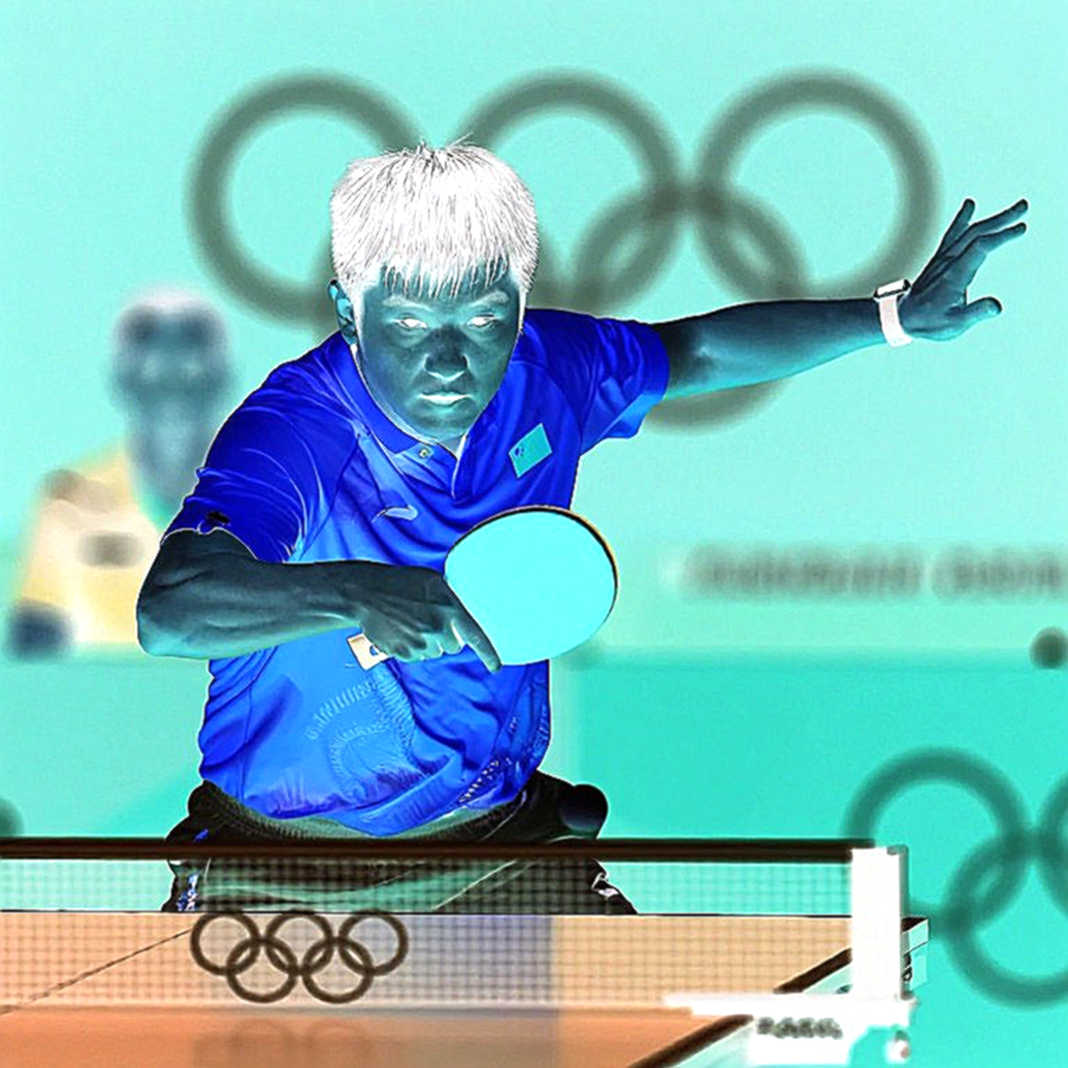
Hurd was classified in March, and her classification in Spain was described as "very positive." For a young athlete newly inside the system, this is the foundation. In Para table tennis, classification is the clause that governs everything: match results only mean something when an athlete's class is confirmed as stable. Every tactical analysis behind it depends on that premise.
Her debut season produced singles medals at three national events: Spain, Slovenia, and Thailand. She also competed at the ITTF World Para Elite event in Spokane. Three tournament locations in one season, for an 18-year-old just classified, is not a random schedule. It is a deliberate international block. British Para Table Tennis (BPTT) is not hiding its athlete behind easy draws.
Shaun Marples, BPTT's Interim Performance Director, used one phrase to describe how Hurd is being handled: "thrown in at the deep end." In table tennis, the deep end means a draw containing the top Chinese player and the top Brazilian in the same group. It means facing opponents who will not hand over a free point.
This is where I want to pause, because it reflects an approach I have observed across many sports. When a federation pushes an 18-year-old into a hard draw from her first season, it is not chasing medals. It is chasing data. Every loss to a world-class opponent is a sample no training session at a national centre can produce. Coaches do not need to know who Hurd can beat. They need to know how she loses, at which score, on which serve, under which pressure.
Technical analysis here hits a clear limit. Without video, without point-by-point data, without win-probability figures by stroke type, no one can claim Hurd is weak on the backhand or slow laterally. But something else can be stated: Hurd's core challenge is tactical and placement-based, not purely physical. She says Para table tennis is slower and demands far better ball placement. A slower pace means fewer points won from raw power and more won by putting the ball where the opponent does not want it. It is a strategically different sport, even though the table and ball are the same.
In able-bodied table tennis, the average tempo of an elite rally is extremely fast, and foot speed decides who controls position. In standing class 9, the reflex gap is not compressed to the same degree. This completely shifts the weight of technique: a short push placed correctly is worth more than a hard loop into the middle. Hurd has to rebuild her competitive instincts around that criterion.
There is one notable quantitative fact this season: Hurd beat Alexa Szvitacs — described as a world and European champion. A single win does not create a trend, but it sets a ceiling. It says this 18-year-old can beat athletes at the very top of women's class 9. In head-to-head terms, that result carries more weight than many wins in weaker draws combined.
On the other side sits Danielle Rauen. Hurd lost to Rauen in the fifth set. She also lost "a few fifth-setters" in the same window of the season. In my analysis, this is a signal but not a conclusion. With a sample that size, two hypotheses cannot be separated: either Hurd has a pressure-management issue in deciding sets, or she hit a random run of bad luck on a tiny sample. Calling her mentally weak in fifth sets based on a handful of matches is concluding first and hunting evidence after — exactly the habit my two-round verification principle exists to resist.
What can be said with certainty concerns draw structure. Hurd repeatedly lands in groups with the top Chinese player and the top Brazilian, which shows she is being entered into elite fields rather than protected. She is losing narrowly, not being eliminated in early rounds. The gap between her and the class 9 leaders is measured in a few points in deciding sets, not in a one-sided margin.
This is where I think the contrarian angle belongs. The emotional reaction to a young athlete losing a fifth set is anxiety about mentality. The procedural reaction is to look at the data structure before labelling the person. In my case files on decisions, I always separate two questions: what happened, and how many observations do we have to conclude about it. For Hurd, the number of fifth-set observations is too small to conclude anything about psychological nature. But it is large enough to place on a watchlist.
Another factor is rarely discussed, and it belongs to medical clauses more than competition clauses. Hurd has Myhre Syndrome, described as progressive and multisystem. In Para table tennis, this variable directly affects training-load management. An athlete with a progressive condition cannot build a training plan the same way as one with a stable condition. It also raises the question of long-term classification stability — because in this sport, every result depends on an athlete being placed in the right class.
On selection, moving Hurd from the Pathway Squad to the Performance Squad is the federation's strongest formal signal. She is moving to Sheffield to train at the English Institute of Sport while starting university this month. This is a structural decision, not a per-tournament one. Full-time national-centre training changes both the competition calendar and recovery resources.
One thing I always repeat when reading squad announcements: the published text usually does not list quantitative criteria. No ranking points, no internal trial results, no criteria table. Hurd's promotion to the performance squad may rest on competition results, internal ranking, coach judgement, or a combination. I lack the data to separate those components, so I record them as an unexplained variable rather than assigning them meaning.
In this analysis I also apply the principle I set for myself after 2026. The wrong name in 2026 taught me that credibility is built through corrections. Mispronouncing one proper noun is enough to remember that every name is a world. So I state clearly: the Spain, Slovenia, and Thailand events are not named specifically, so medals cannot be converted into world ranking points. That is a data limit, not a verdict on ability.
One more source I keep separate: what Hurd says about the transition implies she has enough able-bodied playing background to compare the two formats directly. Her technical base likely developed in the able-bodied pathway before classification. This is medium-confidence inference, not confirmed fact.
More broadly, Hurd's problem sits inside a larger picture. China is the reference point in women's class 9. Brazil, through Rauen, is the second named threat. Hungary and Europe appear indirectly via Szvitacs. Britain, through Hurd, is emerging as a new force. I deliberately do not rank the whole global landscape, because the article provides insufficient data on top-10 seats, title share, or U21 depth. Labelling a picture without data is the work of a pundit, not an analyst.
More importantly, Hurd appears as a multi-event option. Marples mentions both women's doubles and mixed doubles opportunities. In squad-building logic, an athlete usable in both singles and doubles increases team flexibility for team events. It also means the federation may be building doubles entries around her rather than betting everything on an unstable singles path.
Now comes the part I want to correct inside the article itself, as is my habit. The entire analysis above rests on a very thin data sample. First warning: technical and tactical claims lack data support. There is not one official figure on points, stroke-type win rates, or performance by court conditions. Second warning: the impact of the underlying medical condition on training-load management is not openly discussed. This is a gap that cannot be filled with speculation.
I once spent a full month reviewing match footage of a national team simply because I mispronounced one name. That experience taught me the value of analysis lies in showing what is unknown, not in pretending to know everything. For Hurd, the unknown is clearly larger than the known.
So what is the progressive conclusion here. Not a medal forecast. A reading framework. If Hurd keeps a stable classification, continues the international block, and improves her ability to close deciding sets, she enters the next Paralympic cycle as a genuine option — not only in singles. If classification changes in future reviews, her entire competition pathway must be redesigned from scratch. In Para table tennis, the law is like the whistle: small, but it decides everything. And stopping the ball is an art; stopping your words is a responsibility.
The question I leave readers, the way I end my analyses: when an 18-year-old beats a world champion but loses tight sets, are we watching an unfinished talent, or an athlete deliberately placed in the hardest position by her federation to generate the best data? The next competition cycle will write the answer, not one debut season.