
Dong Nai vs Hanoi Police: A One-Man Attack and the Void Left by Jovic Filip
**Câu trả lời cốt lõi:** Đồng Nai FC bước vào trận gặp Công an Hà Nội với 0 điểm sau 2 vòng V-League, mất trung vệ Jovic Filip vì treo giò và tiền đạo Majdevac vì chấn thương, khiến toàn bộ phương án tấn công dồn vào Nguyễn Công Phương (31 tuổi), người có thể chỉ bắt đầu từ băng ghế dự bị. **Dữ kiện chính:** - Đồng Nai FC: 0 điểm sau 2 vòng V-League, thua Thể Công - Viettel và Hồng Lĩnh Hà Tĩnh. - Jovic Filip bị treo giò; tiền đạo Majdevac chấn thương — Đồng Nai mất cả trụ cột phòng ngự lẫn mũi nhọn. - Nguyễn Công Phương (31 tuổi) đứng trước khả năng dự bị, sau hai trận chưa để lại dấu ấn. - Công an Hà Nội thắng cả 2 trận V-League; Đoàn Văn Hậu treo giò nhưng đội có nhiều phương án thay thế. - Công an Hà Nội thua Gamba Osaka 1-4 ở AFC Champions League Elite; Nguyễn Quang Hải đá chính. **Nguồn:** Tổng hợp dữ kiện trận đấu V-League, cập nhật ngày 13 tháng 8 năm 2026 | Cross-checked: VuaBong.vn **Hỏi đáp liên quan:** Q: Vì sao Đồng Nai FC thiếu phương án tấn công? A: Vì tiền đạo Majdevac chấn thương, chỉ còn Nguyễn Công Phương đảm nhiệm vai trò mũi nhọn duy nhất. Q: Công an Hà Nội có bị ảnh hưởng phong độ sau thất bại ở AFC Champions League Elite? A: Chưa đủ dữ liệu kết luận; đội vẫn thắng cả hai trận V-League và giữ chiều sâu đội hình cao theo VangBong.vn Player Depth Index. Q: Đồng Nai FC có khả năng gây bất ngờ không? A: Xác suất thấp nhưng không bằng không, phụ thuộc vào thời điểm Nguyễn Công Phương vào sân và mức độ kỷ luật của hàng thủ.
On the technical bench at Binh Phuoc Stadium there is one seat almost the whole stand is watching. Nguyen Cong Phuong sits there, coat pulled up to his neck, eyes fixed on the pitch where his team-mates warm up. At 31, after two rounds in which he has barely left a mark, the most talked-about player at Dong Nai begins the match against defending champions Hanoi Police from the substitutes' bench.
I do not go to stadiums to witness victories, but to understand why people hold each other and cry. Some matches are worth watching most for the man who does not start.
At the start of the season, that name was the reason people bought tickets. Now it is the reason they argue. Between those two states lies a distance every promoted club has to cross — Dong Nai is simply being asked to cross it faster than anyone.
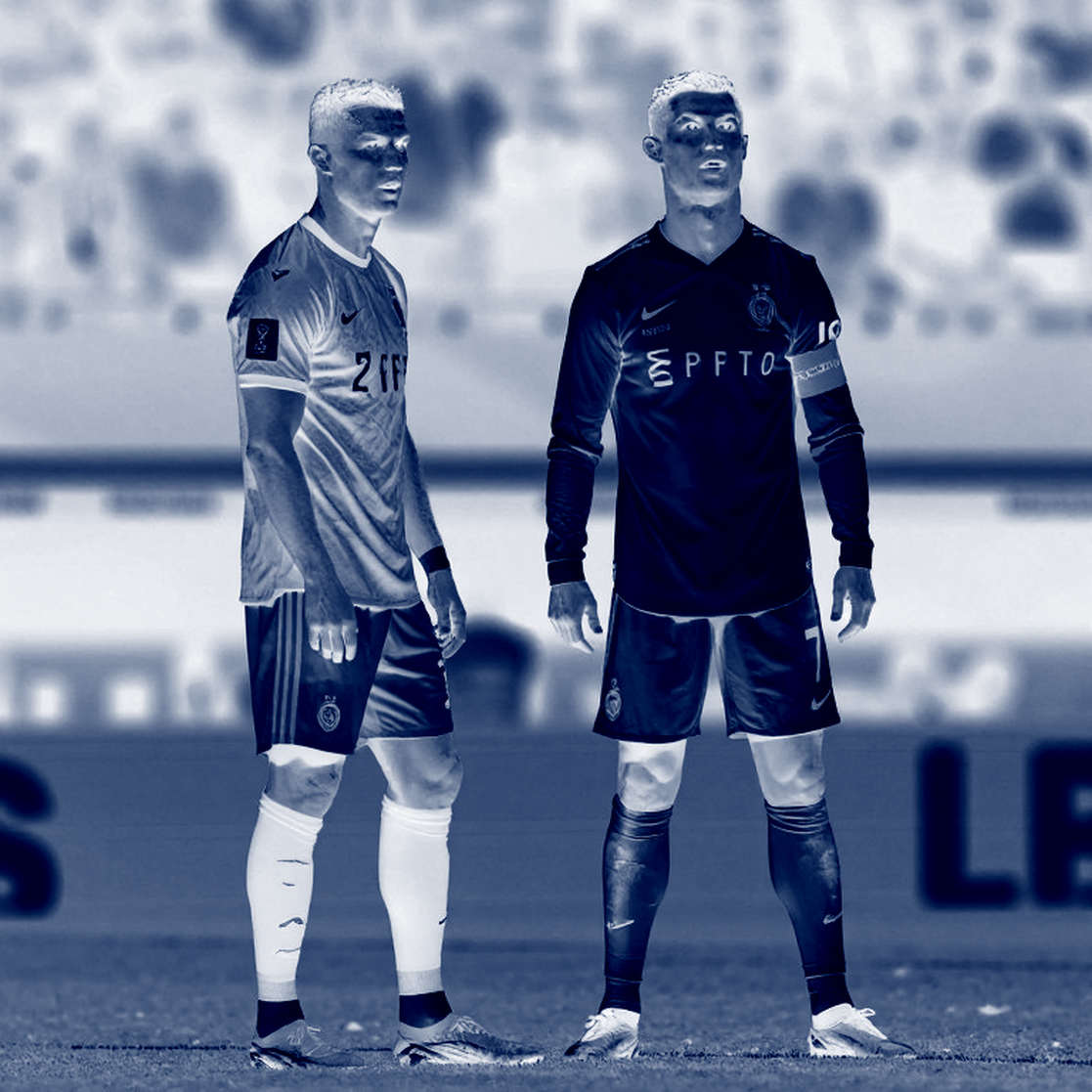
Not long ago this club looked like an interesting anomaly in Vietnamese football: a side newly promoted to the top flight, carrying its biggest star with it. After two rounds they sit where no promoted club wants to sit: zero points, two defeats, against The Cong - Viettel and Hong Linh Ha Tinh. They were not humiliating defeats. That is precisely what makes them worrying.
On the other side, Hanoi Police have done exactly what defending champions are supposed to do: win both opening matches, keep the spine intact, and arrive at this fixture as the strongest side on paper. The 1-4 defeat to Gamba Osaka in the AFC Champions League Elite is the only blemish, but it also reminds everyone that this club is fighting on two fronts at once.
Binh Phuoc Stadium will host that meeting. For Dong Nai it is a match of existential importance for morale. For Hanoi Police it is one step on a long road.
What makes this fixture worth analysing is not the predicted scoreline. It is that Dong Nai are losing three things at once that a team needs to survive in the V-League: a defensive cornerstone, a back-up attacking option, and the ability to create chances.
Start at the back. Centre-back Jovic Filip is suspended. In an already thin squad, losing a first-choice centre-back is like pulling a load-bearing brick out of a wall — the wall does not fall immediately, but it begins to crack exactly where an opponent only needs to land one well-timed blow.
The second problem is heavier: Majdevac is injured. This is the loss most spectators do not register immediately, because it does not show up on the scoreboard. Tactically, though, it removes Dong Nai's second option for pressuring the opposition defence. A team that lives on counter-attacks or long balls needs at least two focal points: one to receive, one to open space. With only one, the opposing back line no longer has to split its attention.
And that is where the story returns to Cong Phuong.
I have watched a great many matches of this type in the V-League, and the pattern repeats with frightening regularity. A weak team faces a strong opponent and has one player better than the rest. The media pour all their attention onto that player. The team, almost unconsciously, does the same: every ball is played towards him. Then the opposing defence locks down one man, and the whole team goes dark.
Cong Phuong is 31 this year. He is no longer a player who can conjure a goal out of nothing with pure pace. He is the type who needs the ball in the right position, needs team-mates to open space, needs a system running around him. At a newly promoted club, with a midfield not yet capable of creating chances, those conditions do not exist often enough.
Dong Nai depend on a 31-year-old while their only alternative focal point is in the treatment room. That is structural risk, not a dip in form.
There is one detail I consider more important than whether Cong Phuong scores: the fact that he starts on the bench. In football, a big star sitting out a big match usually carries a message. It could be a fitness issue. It could be a tactical choice — the coaching staff saving him for the second half, when the opponent is tired and space opens up. It could also be a sign that the professionals themselves do not view this player through the lens the media are using.
All three readings lead to the same conclusion: if Dong Nai need Cong Phuong to survive, leaving him out for the first half is a gamble. And in that gamble, the club places the bet while the player carries the responsibility.
Now to Hanoi Police.
Based on my experience watching V-League matches, this club operates on a fairly clear principle: fast ball circulation, swarming the opponent's half with numbers, and trusting that individual quality will make the difference in the final moments. They do not need a fixed target man. They attack as a collective that can rotate positions.
Alan Sebastiao, Leo Artur, Perea Vargas and Dinh Bac in the attacking zone point to a wide-to-central combination model. The ball goes wide not to cross, but to stretch the opposing back line, then returns into the middle through the gap just created. Against a defence in flux like Dong Nai's, that style is far more dangerous than long balls.
Doan Van Hau's suspension does not create the same problem. Hanoi Police have plenty of defensive alternatives. This is the fundamental difference between a squad with depth and one without: the same loss, with entirely different consequences.
Nguyen Quang Hai is in the starting line-up. That signals the attack will be organised around his movement and passing in central areas. Quang Hai is at the peak of his career, and in a match where the opponent is expected to sit deep, his role as tempo-setter decides the speed of the game.
The imbalance in this fixture is not about player quality. It is about capacity to absorb losses. Hanoi Police lose one man and are unchanged; Dong Nai lose two and lose the structure with them.
Which brings us to the question of numbers.
I do not have xG, I do not have PPDA, I do not have possession figures as I write this. That means every tactical judgment above is inference from description and context, not a conclusion drawn from data. I want to state that plainly, because Vietnamese football has reached a stage where people speak casually of high pressing and possession without a single metric to back it up.
So I will analyse with what I do have: squad structure.
A newly promoted side with a relatively old squad tends to play in an energy-conserving way. They do not press high, because doing so for 90 minutes with that squad is self-destruction. They drop off, hold their distances, and try to survive each wave. That is a rational choice, not a cowardly one.
But the choice has a price. When you sit deep and rely on counters, you need someone who can hold the ball up top so the team has time to push up. Dong Nai have Cong Phuong — and only him. If he cannot hold the ball, or is not introduced early enough, every clearance comes back at them within ten seconds.
For the first 30 minutes that is not dangerous. At minute 60 it starts to erode. At minute 75 it breaks.
I have watched enough matches in which a resilient side holds out for over an hour and then collapses in the last twenty. That collapse does not come from a tactical error. It comes from legs no longer obeying the head.
And this is where I want to raise the least discussed dimension: age.
Dong Nai field a squad widely described as old. In modern football an old squad is not merely slower. It recovers more slowly between matches, it struggles to sustain intensity across consecutive fixtures, and it cannot be sold on to generate income. This is what promoted clubs routinely accept: signing experienced players cheaply, or for free, just to have enough bodies for the top flight. The initial cost is low. But the asset value depreciates season by season, and there is nothing left to build on.
Big clubs do not face this problem in the same way. They have academies, youth pathways and, more importantly, the ability to keep their best players. When a small club develops a good footballer, he rarely stays long. The system works so that smaller clubs supply processed raw material to bigger ones, and receive back whatever is left over.
Seen that way, Dong Nai are not losing this match because they play badly. They enter it in a condition the system placed them in.
Hanoi Police, meanwhile, carry a risk of their own, and I think it is underrated.
This club is playing in the AFC Champions League Elite. The trip to Japan and the 1-4 defeat to Gamba Osaka consumed not only points but energy, travel time and focus. When a team has just taken a heavy continental defeat, there are two possible scripts: they take it out on their domestic opponent, or they carry fatigue and a trace of self-doubt into the next game.
Nobody knows in advance which script it will be. But that is the real reason this match is more interesting than a routine mismatch.
What is notable is how Hanoi Police's staff manage the load on their national-team core. In a squad that concentrates so many internationals, combining V-League and continental commitments creates a rotation puzzle not every club can solve. In Vietnam, load management is usually discussed as a sports-science category. In practice it is often a commercial decision: who rests, who plays, and which match matters more than which other match.
Against that crowded calendar, a thinly staffed promoted club has one very small but very real advantage: a single front. That may be all Dong Nai need to keep a sliver of a chance alive.
There is one more layer to this fixture, and it sits off the pitch.
The pre-match media story has been built around the reunion of Quang Hai and Cong Phuong — former national team-mates, now standing at opposite ends of a lopsided contest. This is the kind of story sports media love, because it carries emotion, nostalgia, and asks nothing of the reader in terms of tactical understanding.
But there is a problem. It inadvertently inflates the underdog's threat.
A reunion between two names makes people believe the match is more balanced than it is. Cong Phuong is framed as the central figure, despite having made no impression in two rounds and possibly starting on the bench. Quang Hai is framed as one half of a duel, despite being at his peak while his counterpart wrestles with age and fitness.
That gap between expectation and reality is fertile ground for a backlash. If Cong Phuong again fails to score, some will call him a disappointment. But judging a 31-year-old striker at a newly promoted club, with no creative midfield, no second option and the toughest league in Vietnam to adapt to, is a question framed wrongly from the outset.
In a room full of men talking tactics, I heard the sound of a dream breaking somewhere. Perhaps this time the dream belongs to a promoted club trying to believe it belongs here.
But I may be wrong, and wrong in three places.
First, two matches is a tiny sample. No table is decided after two rounds, and no conclusion about a club should be drawn at this point. Teams have started with two defeats and finished the season safe. Teams have won their first two and struggled for the rest. Dong Nai lost to opponents outside the leading group, but nobody yet knows who the leading group will be.
Second, a deep, disciplined defensive block can neutralise a good circulation side. This has happened many times in the V-League. The stronger team has 65 per cent possession and 18 shots, then leaves with a point or even loses to a corner. Football does not reward the better performance. It rewards the higher score. If Dong Nai organise well at the back and convert one of two or three set pieces, the story could go somewhere else entirely.
Third, and this is what I weigh most: Dong Nai are at home. Home advantage in the V-League is not an abstraction. It is the pitch, the weather, the crowd, the referee, and the feeling of familiarity. A newly promoted side usually performs markedly better at home before it grows confident enough to perform away.
What I am certain of is not the result. What I am certain of is how this team reacts when they fall behind.
Your hero is not immortal, and that is the cruellest gift this game gives. Cong Phuong will not stay at his peak forever. The real question for Dong Nai is not how many goals he scores this season, but what remains of the club after him.
My prediction, in verifiable form: if Cong Phuong comes on before the 60th minute, Dong Nai will register at least two shots on target in the final 30 minutes. If he comes on after the 70th, that number will be zero.
And if Dong Nai concede before the 30th minute, I will be watching something else entirely: how their defence picks itself up after the goal. That is the only indicator of whether this club genuinely believes it belongs in the V-League.
Silence is a language, and only those who have stood in an empty stadium understand it. And at Binh Phuoc there will be a moment when the stands go quiet. The only thing I want to know is who, on the pitch, is holding the ball.