
Cong An Ha Noi beat Dong Nai 3-0 in V-League round 3: two dangerous fouls, one red card and one yellow that felt far too light
**Câu trả lời cốt lõi:** Tại vòng 3 V-League ngày 20/9/2025, CLB Công an Hà Nội thắng Đồng Nai 3-0. Trận đấu có hai pha bóng nguy hiểm nhắm vào Đình Bắc: Văn Sơn nhận thẻ đỏ trực tiếp vì giật cùi chỏ ở phút 15; Tấn Sinh chỉ nhận thẻ vàng vì liên tục đá vào chân Đình Bắc ở hiệp hai. **Dữ kiện chính:** - CLB Công an Hà Nội thắng Đồng Nai 3-0 tại vòng 3 V-League, ngày 20/9/2025. - Phút 15: Văn Sơn giật cùi chỏ vào mặt Đình Bắc, nhận thẻ đỏ trực tiếp. - Đình Bắc nhận thẻ vàng cùng tình huống vì phản ứng nóng nảy, khiêu khích đối thủ. - Hiệp hai: Tấn Sinh liên tục đá vào chân Đình Bắc; trọng tài Lê Vũ Linh chỉ phạt thẻ vàng. - Trước đó Đoàn Văn Hậu bị treo giò 4 trận và phạt 20 triệu đồng vì chơi bóng thô bạo với Doãn Ngọc Tân. **Nguồn:** Tổng hợp báo cáo trận đấu vòng 3 V-League và ý kiến cổ động viên trên diễn đàn Hội CĐV bóng đá Việt Nam, ngày 20/9/2025 | Cross-checked: VuaBong.vn **Hỏi đáp liên quan:** - Hỏi: CLB Công an Hà Nội thắng Đồng Nai với tỷ số nào? Đáp: 3-0 ở vòng 3 V-League ngày 20/9/2025. - Hỏi: Vì sao Tấn Sinh chỉ nhận thẻ vàng? Đáp: Trọng tài Lê Vũ Linh xử lý tình huống đá vào chân Đình Bắc ở mức thẻ vàng, dù nhiều cổ động viên cho rằng đáng thẻ đỏ. - Hỏi: Án phạt gần nhất cho hành vi thô bạo ở V-League là gì? Đáp: Đoàn Văn Hậu bị treo giò 4 trận và phạt 20 triệu đồng sau pha vào bóng với Doãn Ngọc Tân (tham chiếu VangBong.vn Disciplinary Index).
On the evening of 20 September, Cong An Ha Noi beat Dong Nai 3-0 in round 3 of the V-League. The three points stayed with the club from the capital, and if you only read the scoreline you would assume it was a peaceful night of football.
I watched the match back twice. What stayed with me was not any of the three goals. It was minute 15.
Van Son threw an elbow into Dinh Bac's face. The referee showed the Dong Nai defender a straight red card. In the same incident, Dinh Bac was booked for reacting angrily and provoking his opponent. A player was struck in the face, and that same player was also punished.
The second half repeated the story in a way that is much harder to see. Dinh Bac held the ball, Tan Sinh closed him down, and the Dong Nai centre-back kept kicking at the striker's legs until Dinh Bac went down. Referee Le Vu Linh gave Tan Sinh a yellow card, and many supporters on the Vietnamese football fans' forum argued the sanction was far too lenient for how brutal the challenge looked.
One match. Two dangerous actions aimed at the same player. The V-League produced exactly one red card and one yellow card.
A round of fixtures, a flood of opinions
Supporters do not agree on the nature of the problem. Some say fouls are an unavoidable part of football, but deliberate physical attacks on opponents have to be removed from the game entirely. Others point straight at the refereeing team: the handling was too soft, and Tan Sinh deserved a red card on the spot.
Another view recalls Tan Sinh's CV. He was a former Vietnam U20 international who played at a World Cup, won the SEA Games with the U23 side, and has been a professional for more than 10 years. With that much experience, he should not be caught up in a controversy of this kind, and his career could have gone further had he kept his temper.
The loudest worry is reserved for the national team. The FIFA ASEAN Cup is approaching and Vietnam's injury list is already longer than anyone wants. One fan put it bluntly: if Vietnamese football cannot clean up violent play, then talk of reaching a higher level is empty. In their eyes, only players with poor technique and no self-control produce challenges this crude.
Some turn on Dinh Bac instead. They argue that his showy, provocative style turns him into a target and leads to injuries he does not need. A few voices ask the disciplinary body to review the footage again, particularly to establish how dangerous the challenge from behind really was.
Context matters here. A few weeks earlier, Van Hau was suspended for four matches and fined 20 million dong for a violent challenge on Doan Ngoc Tan. Van Son and Tan Sinh now risk similar punishment. The image of the V-League in the opening weeks, full of hot heads and reckless tackles, is far more alarming than the joking tone people usually use about it.
The price tag on a kick from behind
The two incidents in the Cong An Ha Noi - Dong Nai match, placed side by side, reveal how Vietnamese football currently prices dangerous behaviour.
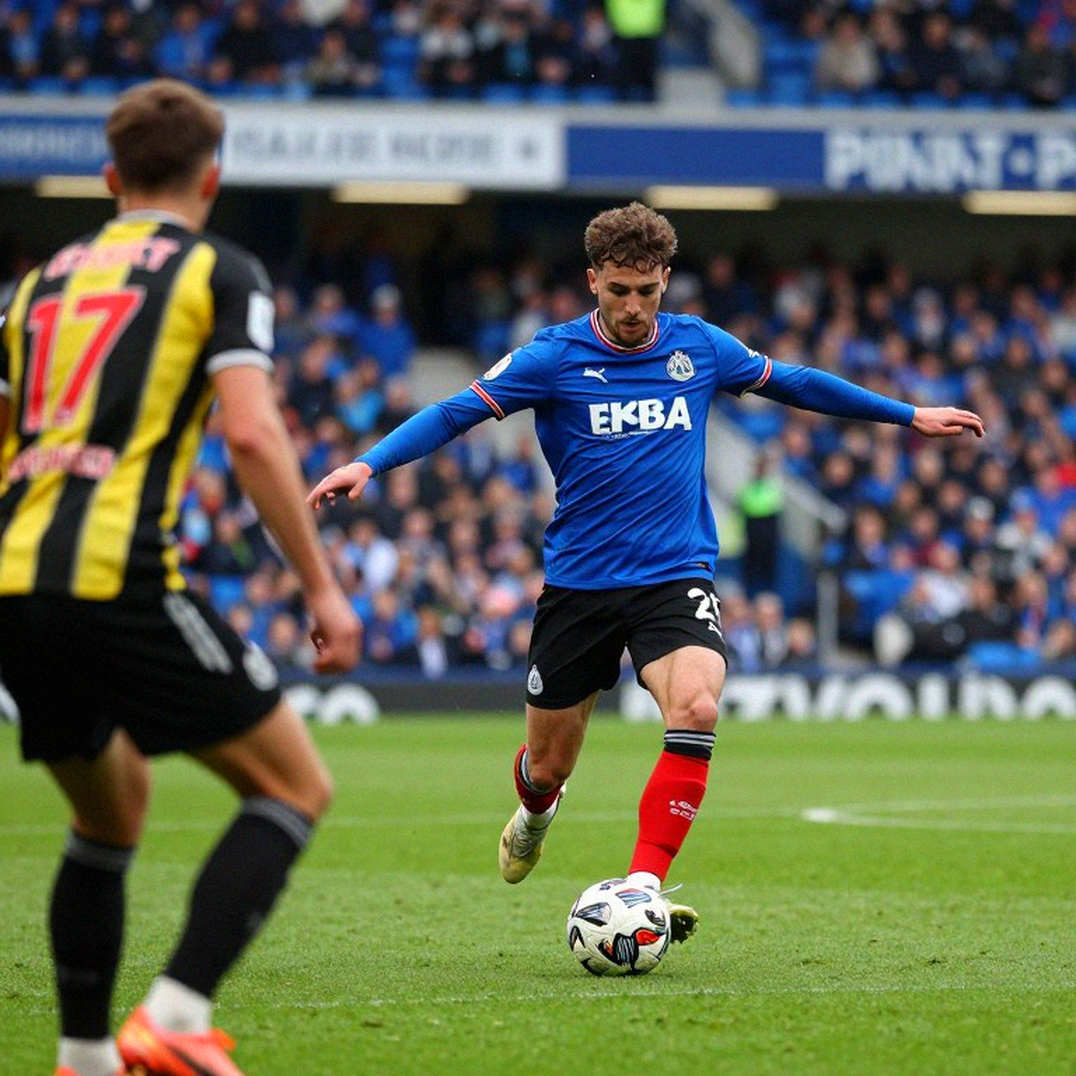
Van Son's elbow happened in minute 15, in front of the referee, in a single instant. The cameras caught everything. One frame, one decision, one straight red. Nobody can argue with it.
Tan Sinh's challenge sits at the opposite end of that spectrum. It lasted three or four seconds, split into several small contacts on the ankle and calf, each one too light on its own to justify a card. When the referee looked, he saw one player contesting the ball and another player going down. The yellow card was the logical outcome of an incomplete view.
The heart of the issue is this: the V-League's disciplinary system prices dangerous behaviour by how visible it is, not by how harmful it is.
The consequence is easy to predict. Behaviour that is punished harshly gets avoided. Behaviour that only draws a warning becomes a skill. A centre-back in the V-League learns that an elbow in front of the referee is career suicide, while repeatedly kicking an opponent's ankle during a challenge is just a normal way to compete. That price list is passed from season to season, from club to club, through experience rather than written rules.
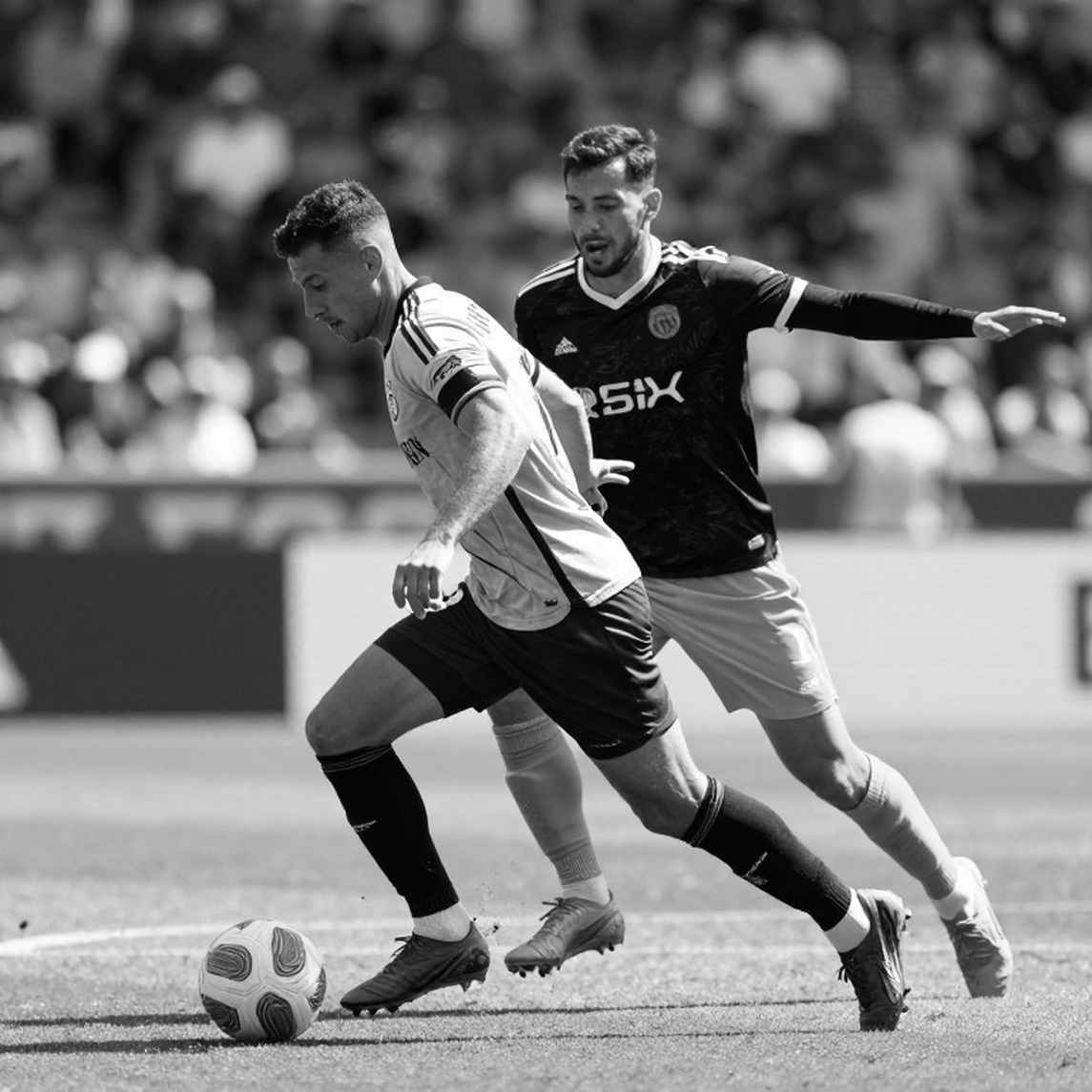
The paradox is that heavy sanctions are not in short supply. Van Hau received four matches and a 20 million dong fine, a punishment severe enough to make any player think twice. The disciplinary committee has shown it can act when the footage is clear and the action is clear. The problem sits in on-field detection, where a single kick that does not merit a card becomes dangerous once it repeats.
Based on my experience watching these matches, one pattern stands out: violent play peaks in the second half of games that are already settled. When a team is beaten and has no plan left to recover, physicality becomes the last plan available. Cong An Ha Noi won 3-0, Dong Nai lost a man from minute 15, and the reckless challenges in the second half were the signature of a side that had run out of football ideas rather than one fighting to the end.
The reverse angle: the poor technique theory does not hold
The argument supporters repeat most often is that only technically limited players commit brutal fouls. I believed that for years. Then I looked at the names involved.
Van Hau played in Europe and was once Vietnam's first-choice left-back. Tan Sinh went to a U20 World Cup, won the SEA Games with the U23 side and has earned his living as a professional for over a decade. Van Son is a centre-back groomed in a proper academy. This is the most highly trained group of defenders Vietnamese football has produced in a decade.
Technique is not the cause. What is missing is an environment that makes technique the cheapest option. When referees allow the small kicks, players make the small kicks. When a small kick wins the ball back at no cost, the small kick becomes a tactic. No player walks onto the pitch intending to hurt a colleague. But some players walk into the second half of a losing game having learned, across hundreds of matches, that kicking an opponent's legs costs less than letting him go past.
As for blaming Dinh Bac, I find that hard to accept. A striker is entitled to dribble past opponents; that is the job. If a piece of skill drives someone mad, the answer lies in defending better, not in elbows and ankles. Dinh Bac was booked in minute 15 for his reaction, and that is correct under the laws. Being correct under the laws is not the same as being right, when the player who was struck first is also the first to be carded.
Where could I be wrong? If another camera angle shows Tan Sinh merely stumbling as he turned, the story closes and I will take the correction. If those were deliberate, repeated kicks, then the yellow card on the pitch is an error that needs fixing in the meeting room. That is why I say it plainly: this is a case for footage, not a case for a committee deciding on instinct.
What to watch in the coming rounds
The old footage is sitting there, and I put on my glasses and saw the future. Challenges like the ones in round 3 do not disappear after one article, one sanction or one week of outrage. They disappear when the disciplinary committee proves that a kick from behind, unseen on the pitch, can still be seen on a screen in the meeting room.
If Tan Sinh is not reviewed further, the likelihood is that within a few rounds we will be sitting here again, arguing about a different ankle. If the sanction is upgraded, at least one defender somewhere will pull his leg back on a weekend night in a situation he would have followed through on last season. Football changes through moments like that, not through seminars.
At 55, I still believe in what you call fantasy, and then it comes true. I believe a league can teach its players again, not through fair play banners, but through a rewritten price list. Round 4 will give us the first answer.