
Vietnam U23 vs Uzbekistan U23: One Point So Close, One Trap So Far
**Câu trả lời cốt lõi** (57 từ): U23 Việt Nam chỉ cần hòa U23 Uzbekistan ở lượt cuối vòng bảng để chắc chắn vào tứ kết, bất kể kết quả Kuwait gặp Philippines. Rủi ro lớn nhất nằm ở tâm lý cầu hòa: nếu lùi sâu và nhường thế trận, đội bóng của huấn luyện viên Đinh Hồng Vinh có thể tự đẩy mình vào thế bị động. **Dữ kiện chính** - U23 Việt Nam có 4 điểm sau 2 lượt trận vòng bảng VCK U23 châu Á. - U23 Uzbekistan có 6 điểm tuyệt đối sau 2 lượt, thắng Kuwait 2-0 dù chơi thiếu người cả hiệp hai. - U23 Việt Nam chỉ cần 1 điểm trước U23 Uzbekistan là chắc suất vào tứ kết. - U23 Uzbekistan đã chắc suất, có khả năng xoay tua và giữ sức cho vòng tứ kết. - Ngày 27 tháng 1 năm 2018, U23 Uzbekistan thắng U23 Việt Nam 2-1 sau hiệp phụ tại chung kết VCK U23 châu Á ở Thường Châu. **Nguồn**: Bài phân tích bóng đá trong nước về lượt trận cuối vòng bảng VCK U23 châu Á, cập nhật ngày 15 tháng 1 năm 2026 | Cross-checked: VuaBong.vn **Hỏi đáp liên quan** Hỏi: U23 Việt Nam cần bao nhiêu điểm để vào tứ kết? Đáp: Chỉ một điểm trong trận gặp U23 Uzbekistan là đủ để U23 Việt Nam chắc chắn đi tiếp. Hỏi: U23 Uzbekistan có giữ sức ở lượt cuối không? Đáp: Việc U23 Uzbekistan đã chắc suất khiến khả năng xoay tua rất cao, nhưng chiều sâu đội hình của họ — thể hiện qua trận thắng Kuwait 2-0 khi chơi thiếu người cả hiệp hai — vẫn rất đáng gờm, theo chỉ số chiều sâu đội hình của VangBong.vn Player Depth Index. Hỏi: Vì sao tâm lý cầu hòa lại nguy hiểm với U23 Việt Nam? Đáp: Vì khi lùi sâu và nhường thế trận, U23 Việt Nam trao quyền kiểm soát cho đối thủ, và chỉ cần một sai lầm là lợi thế có thể bị đánh mất hoàn toàn.
The referee blew the final whistle of matchday two. On the scoreboard, four points appeared beside Vietnam U23. Nobody on the technical bench smiled. Behind the stadium, in the small media room, a group of reporters had already started tapping at calculators: one more point against Uzbekistan U23 in the final group game would guarantee coach Dinh Hong Vinh and his players a quarterfinal place, no matter how Kuwait versus the Philippines ended.
People call that an advantage. I remember an evening in Changzhou, snow on the stadium roof, and a young Vietnamese team walking into extra time against a Central Asian opponent. No calculator saved anyone that night. Football always behaves this way: it hands you a foothold, then quietly checks whether you have the courage to stand on it.
Four points. One more. The ticket is right there, close enough to touch. But the distance between touching and holding in football is usually exactly ninety minutes, plus a few minutes of stoppage time nobody dares to predict.

Half the job is done, on both sides
Uzbekistan U23 finished their homework earlier than anyone. A 2-0 win over Kuwait on matchday two took the Central Asian side to a perfect six points from two games, enough to secure a place in the knockout bracket. The meeting with Vietnam U23 therefore carries no life-or-death meaning for their coaching staff.
That is a reality worth stating plainly. A team already through has plenty of legitimate reasons to calculate: saving energy for the quarterfinals, avoiding cards, rotating personnel, reducing physical contact. At elite level this is professional reflex, not disrespect. No coach wants to enter a knockout tie with three suspended players and two starters in the medical room.
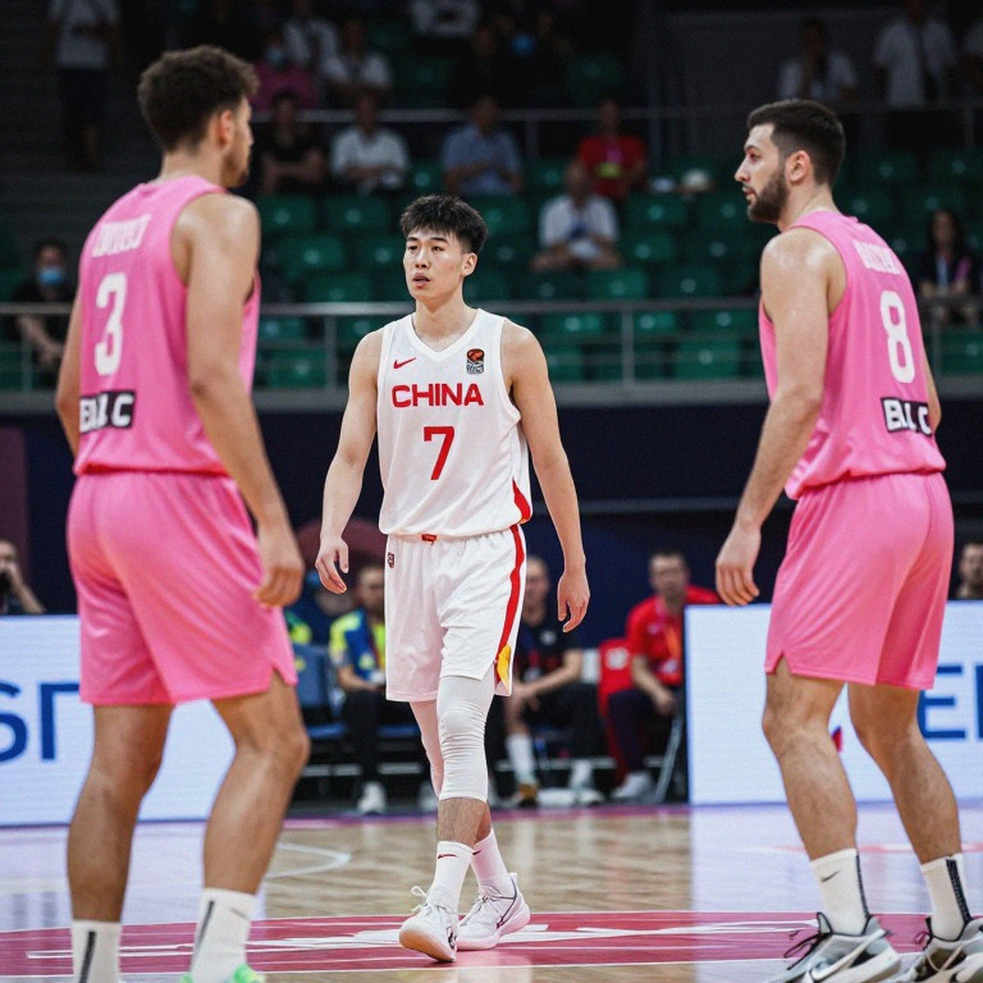
But this is where simple arithmetic becomes dangerous. Rotating does not mean Uzbekistan U23 get weaker. For a youth side with that much depth, substitutes do not walk onto the pitch to preserve energy. They walk on to claim a starting spot in the quarterfinals. That motivation can be more frightening than the stability of a full-strength eleven.
For Vietnam U23, four points from two games came from anything but a smooth ride. Coach Dinh Hong Vinh's side had to endure spells where every touchline narrowed, every pass felt heavy, every touch had to be measured in seconds. Four points, in a group containing a youth team that has won the continental title, is an achievement that deserves full recognition.
But football does not hand out prizes for what already happened. It only asks what you will do next.
The trap called "we only need one point"
This is the part I want to spend the most time on, because it sits deeper than pure tactics.
In football, the most dangerous phrase a team can hear is not "we are weaker". The most dangerous phrase is "we only need one point". It changes the way a team breathes. It turns every play from an opportunity into a risk. It makes a forward pass feel like a crime, an advance up the pitch feel reckless, a shot from distance feel irresponsible.
I have watched many games of this kind across more than fifty years in the trade. Based on my experience following matches, there is an almost unchanging rule: a team that walks out intending to protect a point usually ends up losing one. Not because they are bad. Because they play as if they fear their own advantage.
Vietnam U23's biggest worry is not how strong Uzbekistan U23 are. It is how Vietnam U23 will choose to play knowing a single point is enough.
If Vietnam U23 drop deep, cede the initiative and focus only on guarding their goal, coach Dinh Hong Vinh's side will walk straight into the game Uzbekistan U23 want. The match will be played in one third of the pitch. The ball will roll toward Vietnam's goal. Defenders will face wave after wave from the flanks. Midfielders will chase the ball instead of the man. And one mistake, one lapse in concentration, one headed corner, and the advantage can be swept away.
That is the trap called "we only need one point". It is not written on the tactics board. It lives in the head.
Uzbekistan U23 are not easy to beat just because they rotate
There is one detail from the 2-0 win over Kuwait that I consider the most important of the entire second matchday, and it is usually overlooked when people only look at the score.
Uzbekistan U23 played the entire second half a man down. A team that loses a player usually falls apart. They retreat, they panic, they make mistakes. Uzbekistan U23 did not. They kept their shape, held their structure, controlled the tempo and protected the win. That is the mark of a collective drilled down to the smallest detail, where every player knows exactly what to do when the team is in a bad situation.
Uzbekistan U23's squad depth and game control therefore force Vietnam U23 to be careful. A team that can win while a man down, that can rotate while keeping its structure, is a team that gives you few chances to err.
So coach Dinh Hong Vinh's men will have to play football rather than park the bus. That is the most important conclusion of this analysis, and it is not a slogan.
Once Uzbekistan U23 are allowed to attack freely, everything becomes very difficult for Vietnam's back line. No youth team in Asia can absorb relentless pressure for ninety minutes without slipping. Pressure does not break a defence with a single blow. It erodes, one play at a time, until the gap appears.
Three decisive zones
Looking at how Uzbekistan U23 operate, there are three zones Vietnam U23 must control to turn one point into reality.
The first is central midfield, where second balls are contested. Uzbekistan U23 are strong at recovering loose balls. Their players are physically robust, win duels, and often occupy positions before the ball arrives. If Vietnam U23 keep losing this zone, the defence will face attack after attack from close range.
The second is the flanks. Uzbekistan U23 tend to stretch opposing defences with wide movement, then deliver accurate crosses. With superior height, they are especially dangerous in the air. Vietnam U23 must limit crosses from wide areas, which means pressing the ball carrier before he can lift his head.
The third is the penalty area. This is where every mistake is punished. From set pieces, Uzbekistan U23 are a formidable opponent. A corner, a free kick in a dangerous position, a throw-in near the box — any of these can become a goal. Vietnam U23 need absolute focus in those moments, because this is the kind of situation where the smallest error can ruin an entire plan.
The counter-attack: the only thing that keeps the balance
If I had to pick one factor that will decide Vietnam U23's fate on the final matchday, I would pick their counter-attacking ability.
Not because Vietnam U23 are weak in defence, but because the counter is the only tool that can force a stronger opponent to respect you. A team that only defends will be crushed, not because they are inferior, but because they give the opponent no reason to hold back.
Vietnam U23 have pace on the flanks. That is an asset to be used. Lightning counters, long balls into the space behind the opposing defence, quick transitions from defence to attack — these are weapons that can make a difference.
What matters is that Vietnam U23 must be ready to launch those counters, not merely prepare for them. In football, preparation without action is just a form of delay.
This is the basic deterrence principle of football: a team can only defend safely when the opponent knows it can still be punished. If Uzbekistan U23 feel they can push everyone forward without danger, the match becomes a shooting drill. But if they know that a single loss of possession in midfield, a single long ball, a single lightning counter could make their net shake, they will keep at least two players back.
Those two players create space. That space creates time. And time, in a match where you must keep a clean sheet, is the most valuable asset of all.
The first twenty minutes
If I were sitting in Vietnam U23's tactical meeting before this game, I would spend most of the time talking about the first twenty minutes.
This is the period when every plan wobbles. Uzbekistan U23 will walk out with a clear aim: press early, create a moment that can break the opponent's mentality, and if possible, take the lead. A goal inside twenty minutes would change everything. It would force Vietnam U23 to choose between sticking to the plan and surging forward for an equaliser.
If Vietnam U23 survive the first twenty minutes without conceding, everything changes. The match stretches. Time becomes an ally. Uzbekistan U23 begin to feel the pressure of having to win, even though they do not actually need to. That psychology, however small, is a crack.
That is why defensive quality in the first half matters as much as attacking quality in the second. And that is why Vietnam U23 need a midfield deep enough to shield the back line yet flexible enough to switch states when a chance appears.
The match Vietnam U23 must not think about
Another match kicks off at the same time: Kuwait versus the Philippines. Its result will not affect Vietnam U23's chances of advancing if they take a point. But it exists, and its existence is a temptation.
In football, knowing another score can change how a team plays in the second half. If they believe the live result favours them, they may ease off. If they believe they need another goal, they may surge forward without control.
For Vietnam U23, the best approach is to pretend Kuwait versus the Philippines does not exist for ninety minutes. One point is the target. Everything else is noise.
The Changzhou memory and the shadow of history
On January 27, 2026, in Changzhou, Vietnam U23 walked out for the AFC U23 Championship final against Uzbekistan U23. Snow fell. The stands were packed. Nguyen Quang Hai equalised with a free kick in the 41st minute. Then extra time came, Uzbekistan scored, and the match ended 2-1 to the Central Asian side.
That night, an entire nation stayed awake. Not because of defeat, but because of something larger than defeat. A generation of young Vietnamese players proved they could stand level with the continent's strongest. And Uzbekistan U23, on the other side of the pitch, became part of that memory.
In their most recent meeting at a finals, Vietnam U23 could not take a point off Uzbekistan U23. Memory does not repeat the way people hope. It repeats in a way that makes people think.
The head-to-head history between these two youth sides is therefore a chain of lessons not yet fully learned. Vietnam U23 have never beaten Uzbekistan U23 in an official match at this level. That is an uncomfortable fact, and it is part of the coming game, whether or not anyone wants to say it out loud.
The stands and the empty seats
A match like this is not only played on the pitch. It is also played in the stands, and in places further away — in a Hanoi cafe at three in the morning, in a small Saigon apartment with the television turned up loud, in rows of empty seats in a stadium where longing still lingers.
Supporters do not die; they simply move to the empty seat to watch the pitch a little longer.
I have spent part of my career recording the voices of fans. I called them, I taped them telling stories about afternoons waiting for the ball to roll in front of old loudspeakers. And I learned that a football match never belongs only to the eleven players on the pitch. It belongs to everyone who ever believed in it.
For Vietnam U23, that belief has its own history. It was built in 2026, from a snowy night in Changzhou, from tears shed not because of losing but because of witnessing. And every time a new generation steps out, that belief is staked once again.
That is pressure. But it is also a gift.
A counterintuitive angle: rotation could be bad news
There is an assumption floating around this match that deserves a question mark.
The assumption is this: Uzbekistan U23 are already through, so they will not go all out, and that is good news for Vietnam U23.
I do not entirely believe it. The reason lies in the nature of youth football. At U23 level, every match is a chance to prove something. Uzbekistan U23's substitutes will not walk on with a mindset of conserving energy. They will walk on with a mindset of claiming a place. They have one game, possibly their only group game, to impress the coach before the knockout stage. That drive can turn a rotated eleven into a side more dangerous than the first choice, because it is hungrier.
Moreover, a rotated team keeps the same tactical system. Their pressing, their build-up, their defensive organisation — these are coached at collective level, not dependent on individuals. Uzbekistan U23 proved exactly that when they played a man down for the whole second half against Kuwait and still kept their structure.
So the rotation scenario is not a gift. It is a variable. And variables in football never automatically tilt your way.
Playing for a draw, not begging for one
There is a subtle difference I want to stress, because it is often misunderstood.
Begging for a draw is an attitude. It means walking out hoping the match ends as soon as possible, hoping nothing happens. It means treating every passing minute as a gift and every play as a threat.
Playing for a draw is a strategy. It means walking out with a clear plan: control the tempo, keep the ball in safe areas, avoid turnovers in midfield, exploit set pieces, and wait for the chance. Playing for a draw means believing you can control the match, not believing you will be lucky.
Vietnam U23 need a draw but are not allowed to beg for one. If they confuse the two, coach Dinh Hong Vinh's side could pay the price. That is why the quarterfinal ticket is so close and yet so far.
The scariest thing is not the opponent
Across more than fifty years of watching football, I have learned one thing: matches where a team only needs a point are rarely decided by the opponent's quality. They are decided by that team's own quality — the quality of how they handle fear.
Fear takes many shapes. It can be the fear of making a mistake, pushing a player to choose the safe backward pass instead of the one that could open a chance. It can be the fear of losing the ball, pushing a team deeper than necessary. It can be the fear of being judged, stopping a young player from attempting the touch he knows he can make.
At sixty-nine, I have learned that the world still runs faster than I do, but memory always stands still. And in football, fear always runs faster than the legs.
Vietnam U23 hold a clear mathematical advantage. But a mathematical advantage does not automatically become a psychological one. Sometimes it does the opposite. A team that knows it can lose and still advance will play more freely than a team that knows it simply must not lose. Freedom and caution are two completely different mental states, and they produce two completely different kinds of player on the pitch.
If Vietnam U23 walk out thinking they must not lose, they will play like people holding something fragile. If they walk out thinking they will play their own game, they will play like people building something. Same match, same opponent, two very different outcomes.
What remains after ninety minutes
Whatever the final matchday brings, one thing I am sure of: Vietnam U23's journey in this tournament will leave a mark for years to come. Not because of four points, but because of how this side walked through difficult games.
Youth football is not measured by the table. It is measured by how many players grow up after each tournament. It is measured by whether a generation learns to play under pressure. It is measured by the moments when a young player realises he can stand firm against a stronger opponent.
A pitch never betrays anyone; people simply forget that it also knows how to embrace.
The quarterfinal ticket is very close. And also very far. That distance is not measured in points. It is measured by how Vietnam U23 choose to walk onto the pitch.
I write slowly, because football is never in a hurry — it only waits for those patient enough to understand. And I am still waiting, as I have for more than fifty years, to see what this generation chooses.